
5 November, 2026
By Cressida Liu, Project Officer (AI) at UNSW Founders
For anyone familiar with Indiana Jones, the story usually does something like this: locate the priceless artefact, survive the booby traps, defeat the villains, and return home to safely place the cultural treasure in a museum where society can benefit from it.
But what happens when the treasure is culture itself?
For artists, writers, musicians and filmmakers, those treasures are the works they create: songs, artworks, stories, films, and ideas. But in the age of generative AI, the roles are now becoming less clear - Who is collecting the treasure? Who gets to preserve it? And, perhaps most importantly, who decides what happens to it?
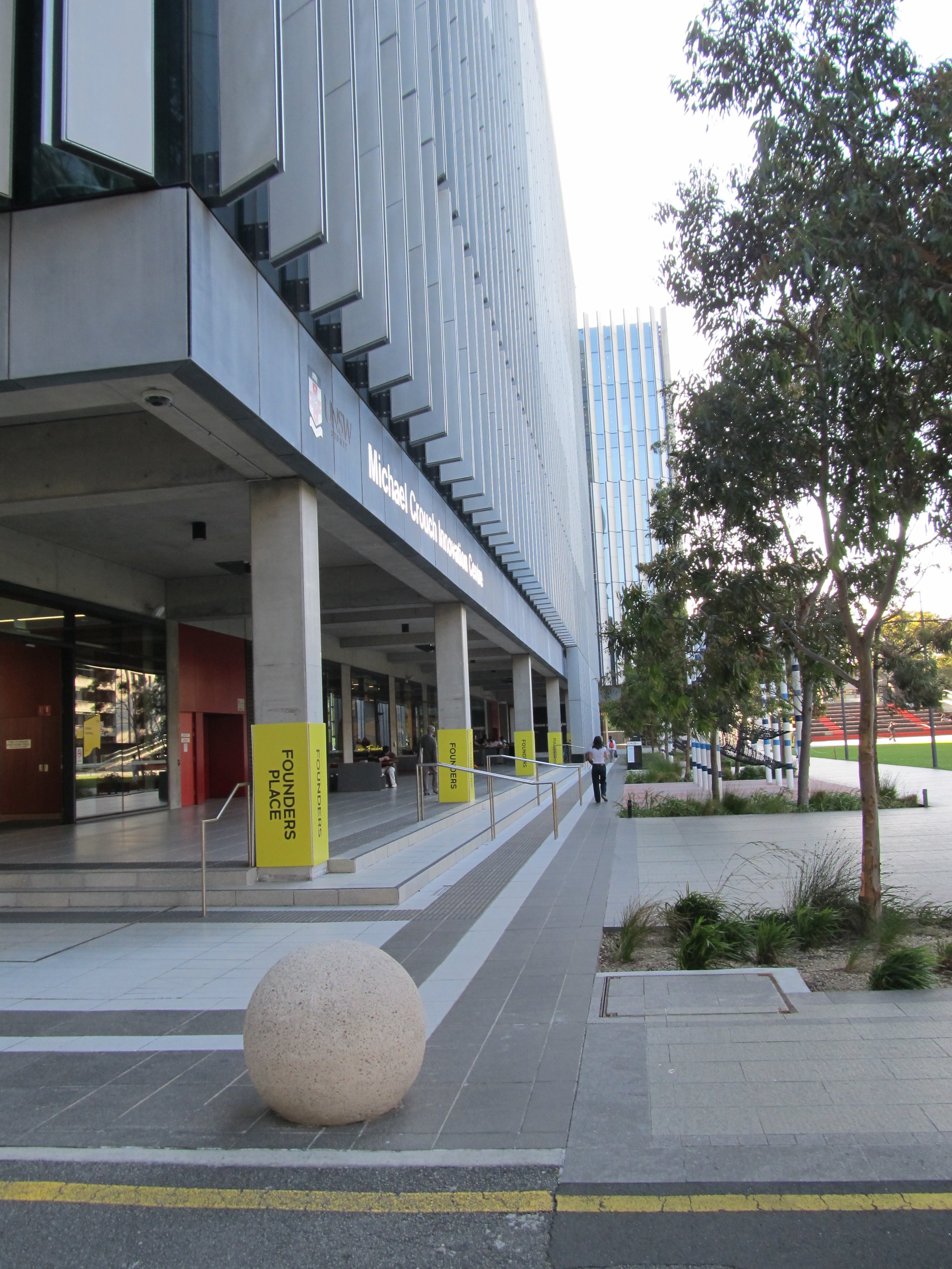
These were questions at the heart of Can Artists Escape Big Tech in the Age of AI?, a panel hosted by UNSW Founders and UNSW Arts, Design and Architecture, Moderated by Professor Oliver Bown, the conversation brought together voices working across music, storytelling, technology and the creative industries to explore a question that is becoming increasingly urgent.
Generative AI can now produce work in seconds that might once have taken artists years to develop the skills to create. Yet these technologies rely on vast collections of human-created material, raising questions about ownership, attribution, and who benefits from the value being generated.
AI has already changed creative industries. The question now is how much control artists and creative communities will have over what happens next.
Oliver Bown: What happens when creativity becomes effortless?
As Professor at UNSW Arts, Design and Architecture, Oliver Bown has spent much of his career thinking about machines as creative partners.
Oliver spoke about a growing concern among students. What happens when creative works become effortless? If a machine can instantly perform tasks that once required years of practice, how do people remain motivated to develop skills in the first place? For Oliver, the discussion goes beyond what technology can produce. It is about the intention behind creative work; the value of developing skills, and the choices people make about how technology is used.
The ability to generate something does not necessarily replace the purpose, understanding, or human experience involved in creating it.
Caroline Pegram: Who owns creativity when machines can imitate it?
For Caroline Pegram, Co-Founder and Co-CEO of Koup The Vault, the question of creative ownership is becoming impossible to ignore.
Through The Vault, Caroline is working to build a rights-aware system that gives artists and intellectual property owners greater control over how their work is used by AI. Caroline argues that generative AI has asked the creative industry to confront who actually owns creativity when a machine can imitate it. Platforms like Suno, Eleven Labs, and others can generate realistic voices and music but were obviously trained on vast amounts of human-created music.
The challenge, according to Caroline, is the lack of transparency, attribution and trust around how creative works are used. In a study commissioned by the international confederation of societies of authors and composers (CISAC) and PMP strategy, they projected that generative AI expansion could put 24% of music creators’ revenues at risk by 2028 – representing a potential cumulative loss of €10 billion over five years. Campaigns such as the UK’s Is this what we want? Have emerged alongside growing advocacy from creatives calling for strong protections around copyright and AI. Yet Caroline also sees an opportunity of the beginnings of an entirely new market emerging. As artists and rights holders are increasingly signing licensing agreements, creative organisations are exploring new partnerships to harness the benefits of AI while still having agency over their IP, and an emerging market for responsibly managed cultural intellectual property is taking shape.
The question is not simply whether AI companies can use creative work. It is whether artists can participate in deciding how their work is used and share the value it generates.
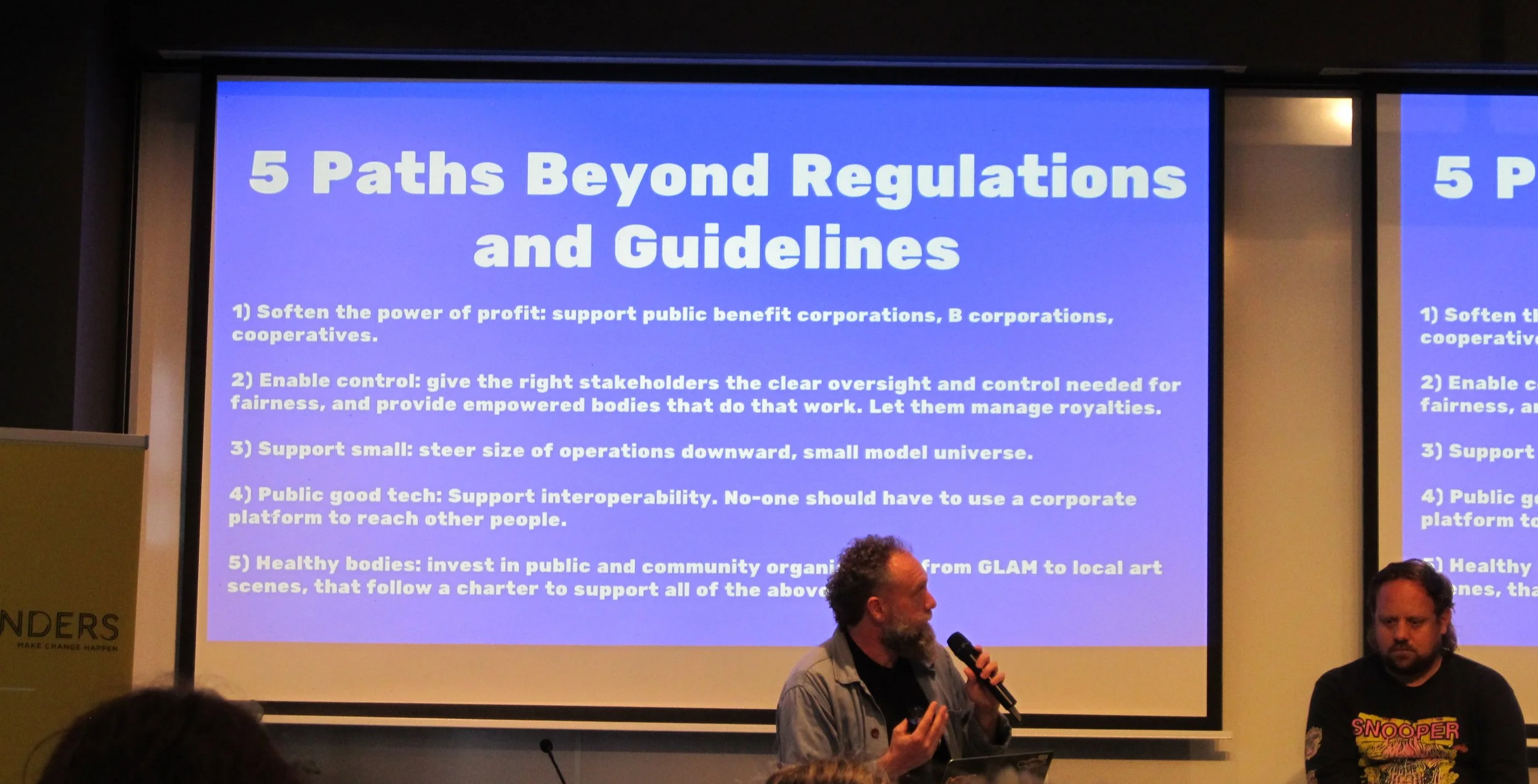
Joe Hardy: The impact of scaling on community
While Caroline raised questions about ownership, Joe raised a different concern: what happens when creative communities become dependent on the platforms promising to help them grow?
Joe is the Co-Founder of SydneyMusic.net, a not-for-profit platform connecting people with live music across Greater Sydney. For Joe, the conversation around AI feels familiar because creatives have already experienced something similar: social media. Platforms promised reach, growth and connection, but over time many creators found themselves becoming dependent on algorithms to reach their own audiences.
Oliver Bown shared a story about his band’s experience with Facebook. They spent so much effort building a Facebook page following, only to realise that they eventually had to pay to reach the very people who had chosen to follow them in the first place.
Joe questioned whether aa similar dynamic could emerge with AI. Where commercial incentives and the pressure to adopt new technologies risk putting platforms' interests ahead of creative communities.
We are seeing venture capital and market incentives helping drive corporate adaptation of AI, often through the lens of quick boosts to productivity.
But Sydneymusic.net has adopted a “zero-AI” policy. For now! Rather than adopting technology simply because it is available, the organisation has chosen to step back and ask questions about their principles. What are they trying to achieve? Are these systems aligned with our values?
Joe also made a point about scalability in creative industries: one thing technology can’t scale is human connection. For sydneymusic.net, remaining focused on local communities is part of what makes the platform useful. Human connection, shared experiences and the culture surrounding live music cannot simply be scaled in the same way as software. Sometimes, staying small is a deliberate choice.
Kate Armstrong-Smith: Can AI help us understand creativity?
Kate Armstrong-Smith, founder of Othelia Technologies, brought another perspective: AI's potential to change how stories are created and understood. Long before ChatGPT became mainstream, Kate was experimenting with the idea that stories could be understood as maps made up of values, relationships, and consequences.
If the worlds and characters created through stories could be mapped, could technology help creators explore narrative possibilities that might otherwise remain hidden?
That thinking has evolved into Othelia, which develops specialised AI systems to support storytelling and the management of complex fictional worlds.
Kate’s suggested AI may ultimately help us better understand creativity itself. By breaking stories down, we may gain a clearer understanding of how culture works in the first place. AI does not have to be used simply to produce more content, faster. It can also help creators explore their own work in new ways.
The opportunity lies in designing tools that support creative intention, rather than treating human creativity as something to automate away.
So, can artists escape Big Tech?
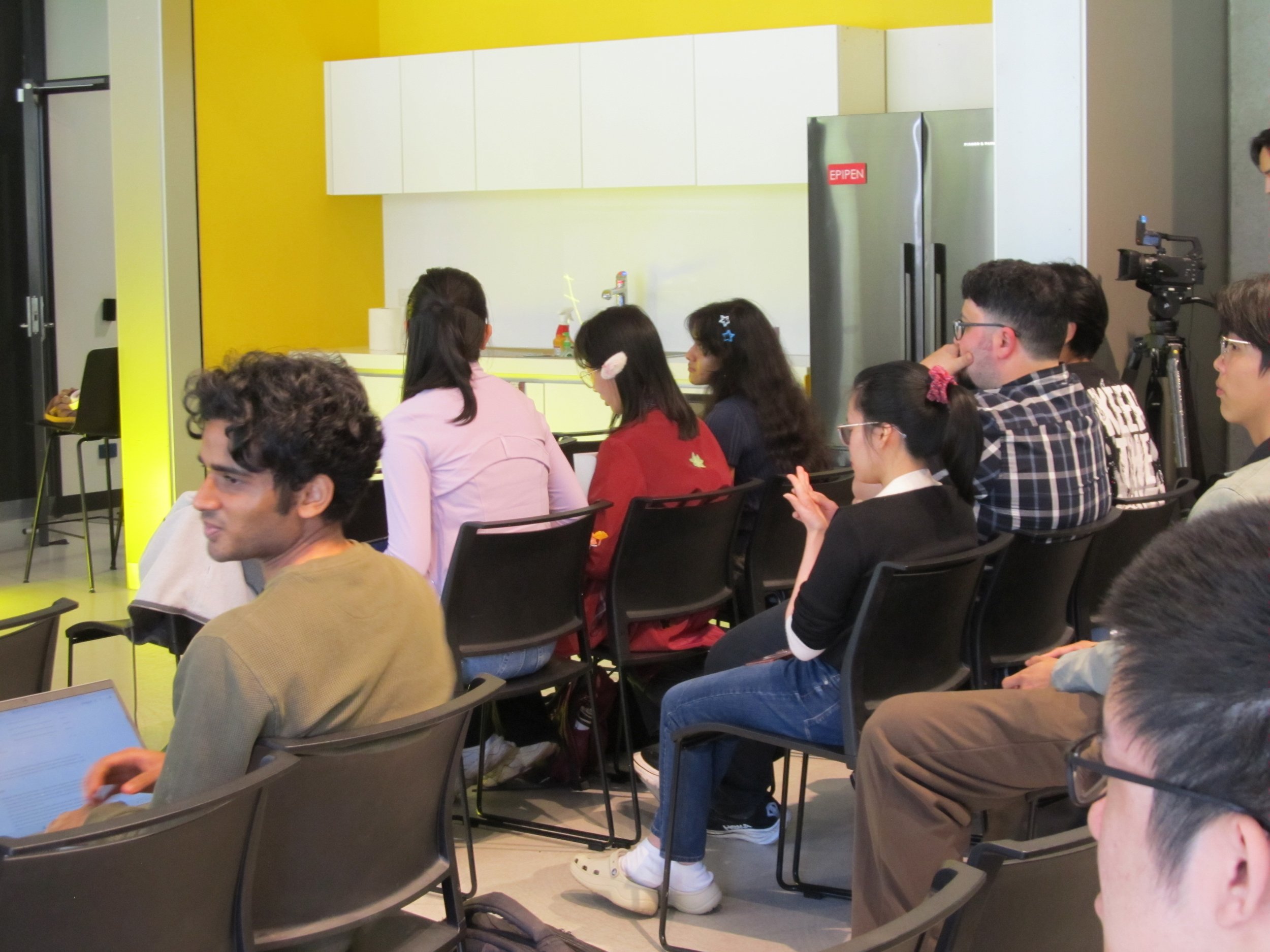
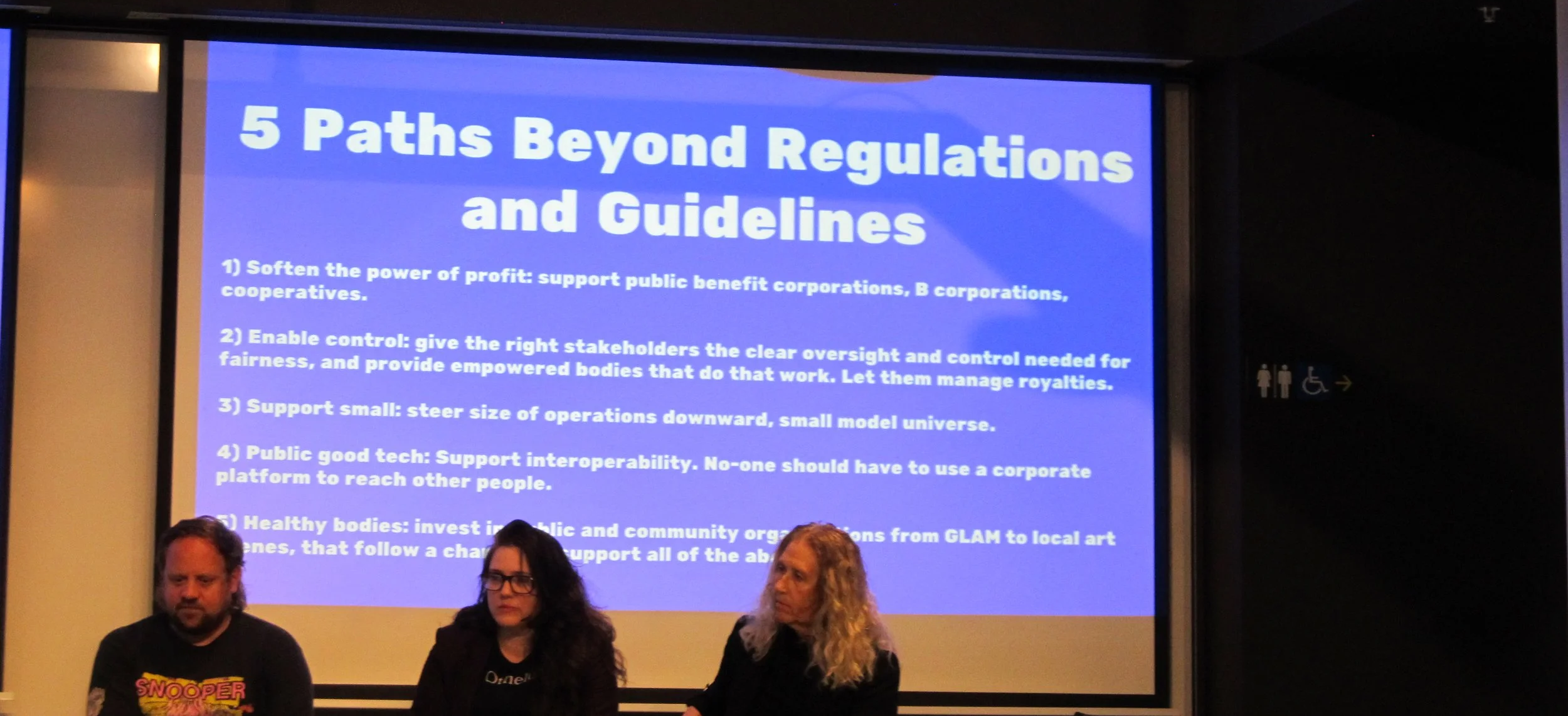
The discussion did not produce one simple answer. Instead, five ideas emerged about what a healthier future for creativity and technology might require.
Putting public benefit alongside profit. Exploring alternative organisational models, including cooperatives and purpose-led businesses, that prioritise cultural value rather than growth at any cost.
Giving creators meaningful control. Ensuring artists and rights holders can influence how their work is used, who benefits from it, and how its value is shared.
Recognising the value of staying small. Building technologies and organisations around the needs of particular creative communities, rather than assuming everything should scale.
Supporting technology for the public good. Creating independent, interoperable platforms that allow people to connect, create and participate without depending entirely on corporate ecosystems.
Strengthening cultural institutions. Supporting museums, venues, libraries, local arts organisations and the communities that preserve, share and give meaning to creative work.
Taken together, these ideas point to something bigger than a debate about AI tools.
The future of creativity will also depend on who builds the platforms, who sets the rules, and whether the institutions supporting artists are strong enough to give them meaningful choices.
Back to Indiana Jones
Perhaps the question isn’t whether artists can escape big tech, but whether society can build platforms, communities and cultural institutions strong enough to protect our cultural relics and allow artists to retain control of what they create, before they’re swept into someone else’s treasure vault.
The villains are not necessarily the machines - the real danger is building a future that values the treasure but forgets the people who created it.