

28 October, 2026A copper merchant disappoints his customer. The customer puts his complaint in writing.
Nearly 4,000 years later, it is known as the oldest known written customer complaint. Dating around 1750 BCE, the complaint from customer Nanni to merchant Ea-nasir complains that the wrong copper was delivered.
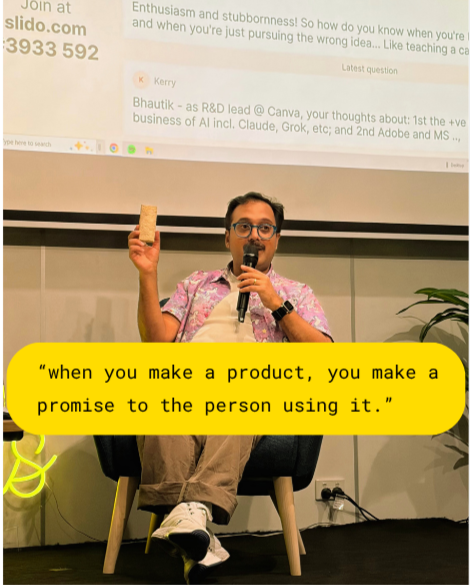
At October’s First Thursdays guest speaker, Bhautik Joshi, Head of R&D at Canva, brought along a replica to make a point: when you make a product, you make a promise to the person using it.
For Bhautik, the lesson is in that broken promise. The merchant had supplied something that failed to deliver what his customer expected.
It is an unexpectedly enduring lesson for anyone building something today. Whatever technology you use, someone on the other side is trusting you to deliver.
Does the product do what they need? Does it live up to what you promised?
That offers a useful starting point for thinking about AI, too. New capabilities can make us stop and marvel. But, as Bhautik put it, the wonder and emotion of “astonishing is not the same as good.”
Where our judgement comes in
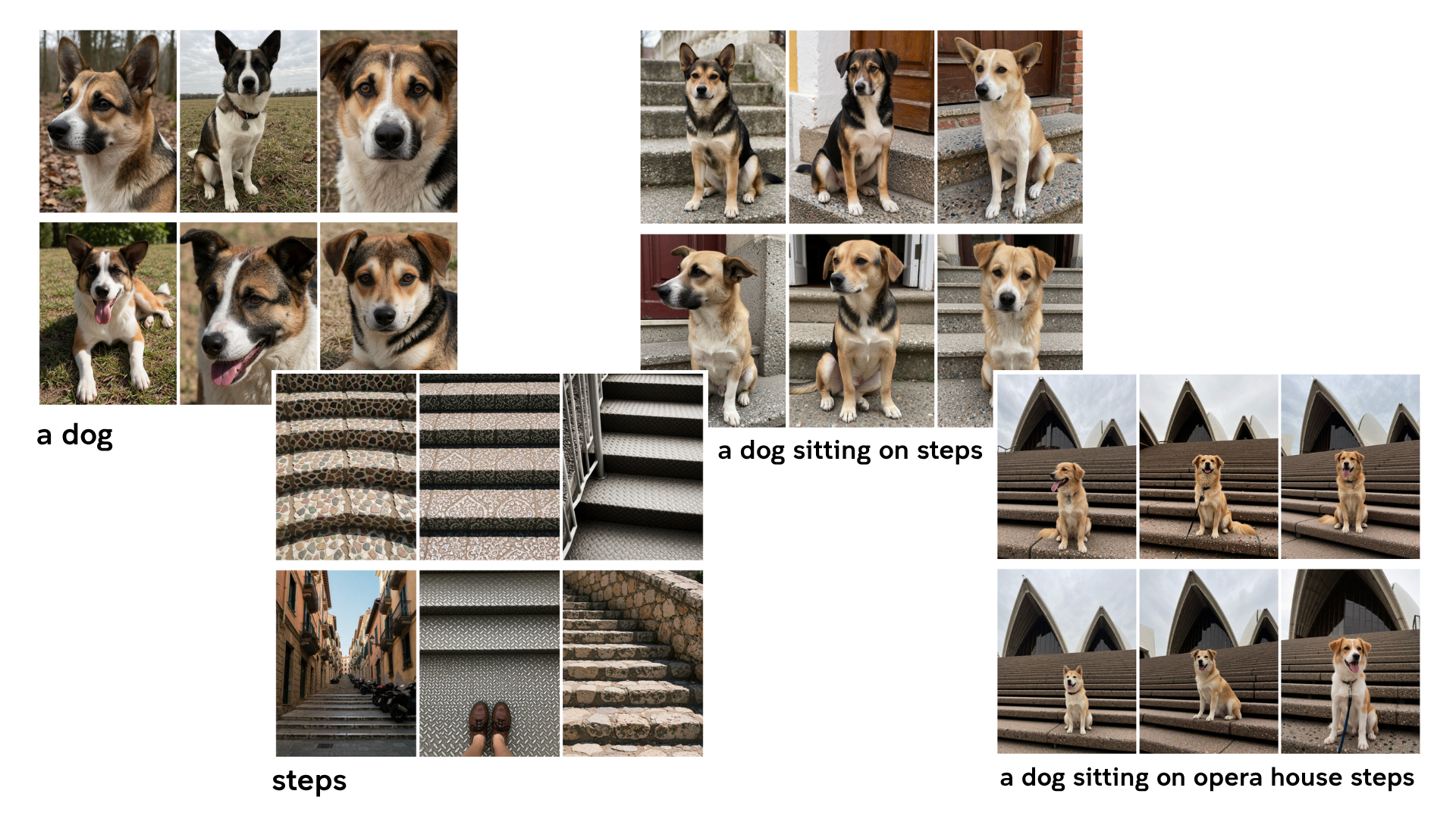
Bhautik made this tangible for the audience by showing how much aesthetic-bias plays into what AI produces.
Aesthetic-bias is when we favour, (or confuse) what looks polished, slick, or "right" over what actually works best.
If it’s followed without consideration or objective and critical thought, it can steer decisions away from what actually performs best and can lead us to back ideas, products, or solutions based on appearance rather than evidence around what delivers real value, traction, or impact.
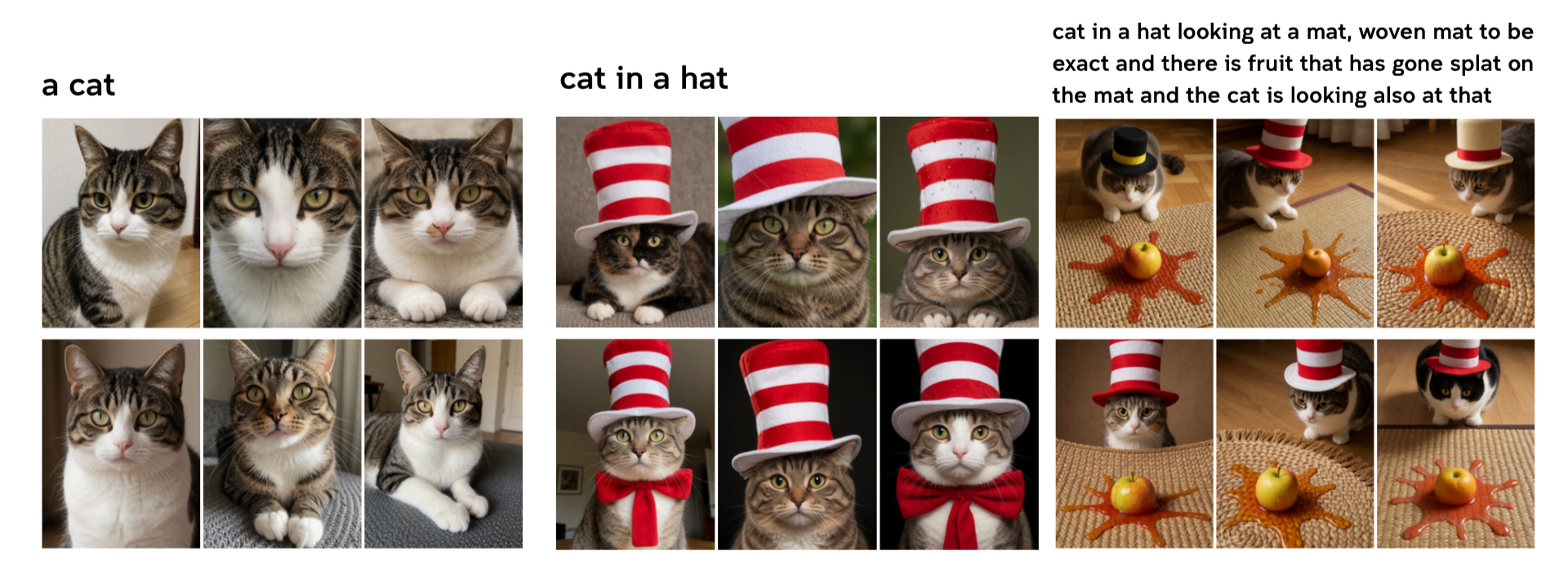
Bhautik showed how AI-generated images can repeatedly gravitate towards “familiar visual patterns” despite the possibilities a prompt leaves open.
Recognising those limitations helps put the technology in perspective.
An AI tool can produce something impressive, but as the prompt engineer you should still question its choices, decide what is useful, reject what misses the point and retain control over what you make.
The importance of this is only increasing as the pace of change and improvement of AI can make people feel their own skills are becoming less valuable. Bhautik acknowledged that increasing anxiety across all sectors of society and encouraged everyone to actively start experimenting as an important exercise to build their own AI judgement and regain agency. Understanding what these tools do well, recognise their weaknesses and build on their strengths is this way to overcome anxiety and build our own value into the way we use these tools.
Bhautik’s own writing provided a more grounded example. While working on a book, he uses a language model to suggest how dense, academic passages could read at a Year 9 level without losing technical detail. He keeps his own voice rather than adopting the output directly, but the exercise helps him learn to write more accessibly.
Here, the technology supports his development. He chooses the task, assesses the suggestions and decides what to take from them.
The useful kind of stubbornness
-“Enthusiasm and a kind of stubbornness is really important”
Reflecting on what it takes to work in research and innovation, Bhautik outlines the critical need for enthusiasm. As complex work involves encountering roadblocks and trying things that don’t work, you need passion and stubbornness to keep driving and learning through the setbacks.
First Thursdays is a conversation; and an audience member raised the obvious tension: “how do you distinguish that persistence from repeating an approach that keeps failing?”
They offered the example of trying to teach their cat to fetch (it wasn’t going to happen). Bhautik’s suggestion was to change the question. Instead of approaching it as “I’m going to make my cat fetch”, ask: “Can my cat fetch?”
The first commits you to a particular outcome.
The second gives you something to investigate, including the possibility that the answer is no.
That was the kind of stubbornness he meant: staying with a question long enough to learn something, even when the result challenges your original idea.
“The end doesn't mean that it's working. The end means we know whether it works or not.”
For founders, an experiment that rules out an approach can help you decide where to put your effort next. You can be persistent in finding an answer while remaining willing to change direction because of it.

Passing that judgement on
Knowing when to persist, change direction or question a result takes experience. Bhautik is deliberate about sharing the reasoning behind those decisions.
After 14 years in California, he returned to Australia expecting to have plenty to teach. Instead, he found himself learning from the people he was mentoring. His experience was useful, but the important part was explaining why he would choose one approach over another, so others could make more informed decisions themselves.
That commitment has roots in his own career.
“I’ve had a bunch of people that have helped me out, I just feel like it's my obligation now to help others.”
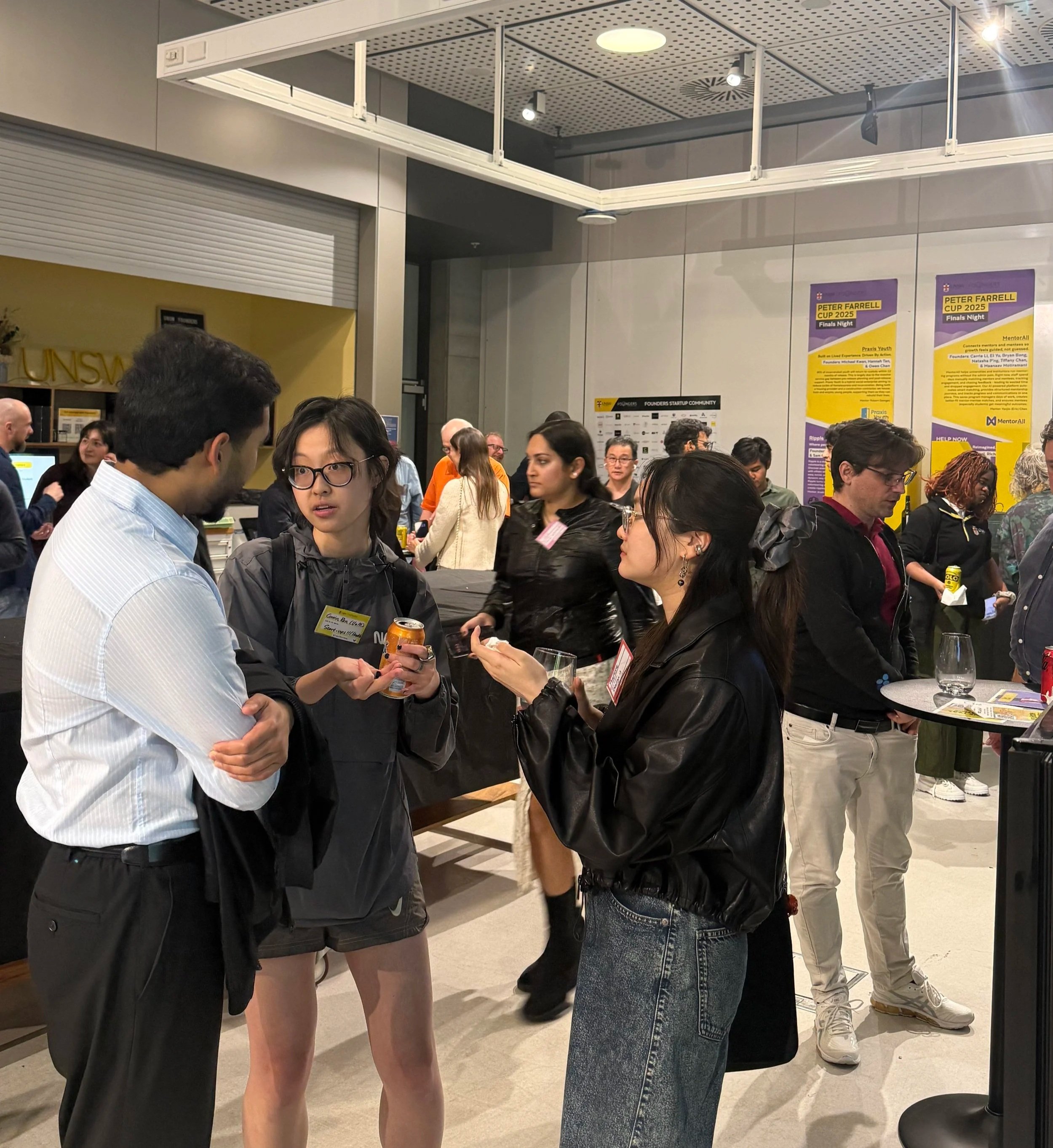
At First Thursdays, that meant making years of experience available to a room of people facing their own uncertainties. Bhautik’s generosity offered another way to leave a mark: helping someone else approach what they make with greater confidence and care.
That is the value of having someone like Bhautik share their experience with the community.
Diversity in thinking, experience and depth of knowledge in a varied array of fields might just be the thing you need to make your next decision: helping shape a better question to ask, an new assumption to test or the confidence to try another approach.
About First Thursdays
The UNSW Founders monthly First Thursdays event is where we bring together the people that make the UNSW Founders community work.
Innovators, investors, founders, mentors, collaborators, and startup enthusiasts all gather to hear from an incredible speaker, ask them anything, and then network with the community.