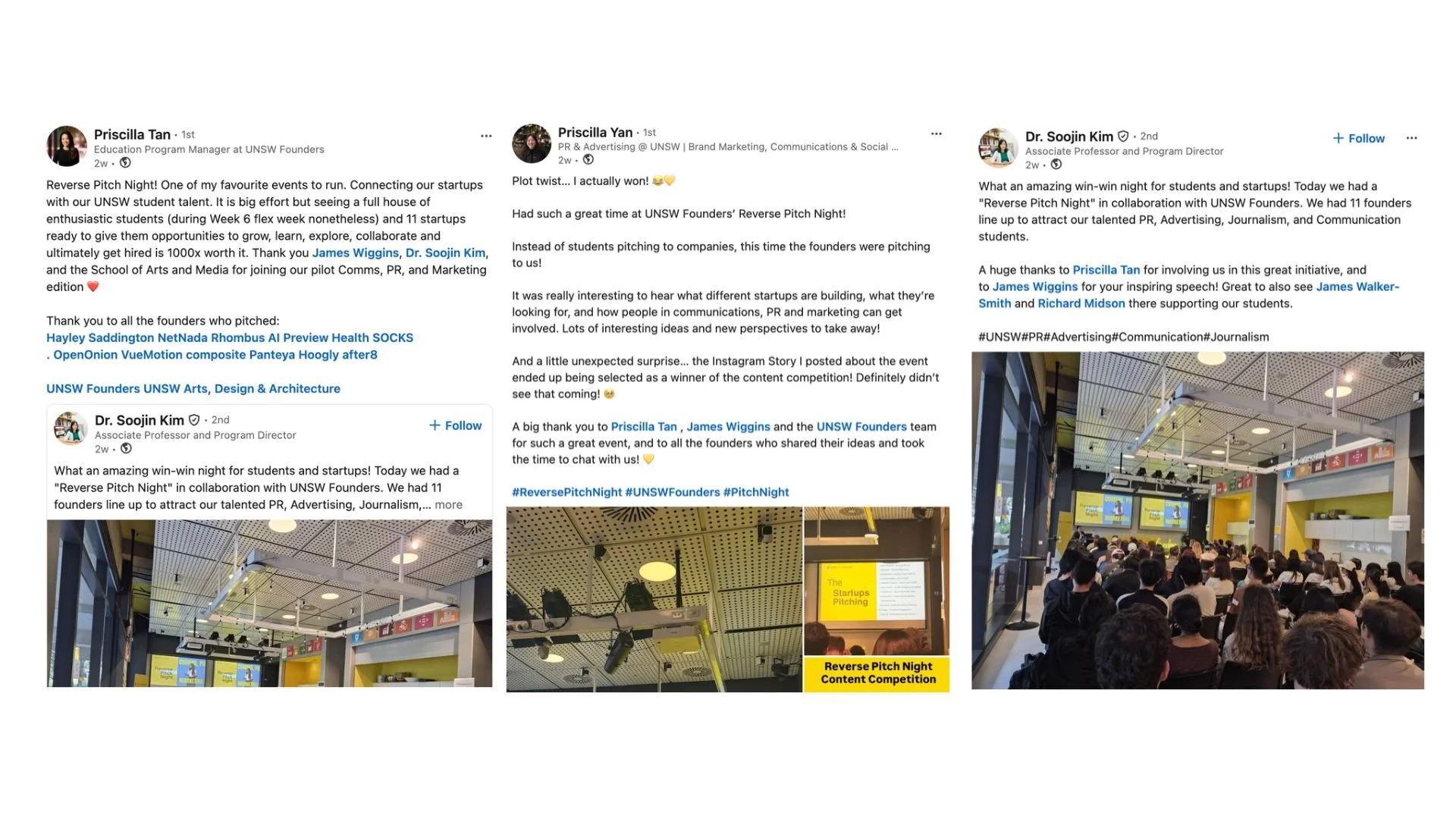
Most career events follow the same formula: students line up, polish their elevator pitches and try to stand out to employers. At Reverse Pitch Night, we changed things out.
Instead of students pitching themselves for a job, founders pitched to a room full of students on why they should come and work with them.
Eleven startups took the floor in two-minute pitches:
Peak Medical – Physical Rehab
NetNada – Climate Reporting
Rhombus AI – Agentic Data Platform
Preview Health – Brain Health
GROUND Support – More than SOCKS
Open Onion – Private AI deploy and adopt
Vue Motion – Sport and Health Tech
Composite – Large Format Additive Manufacturing
Panteya – Clinic and Patient Platform
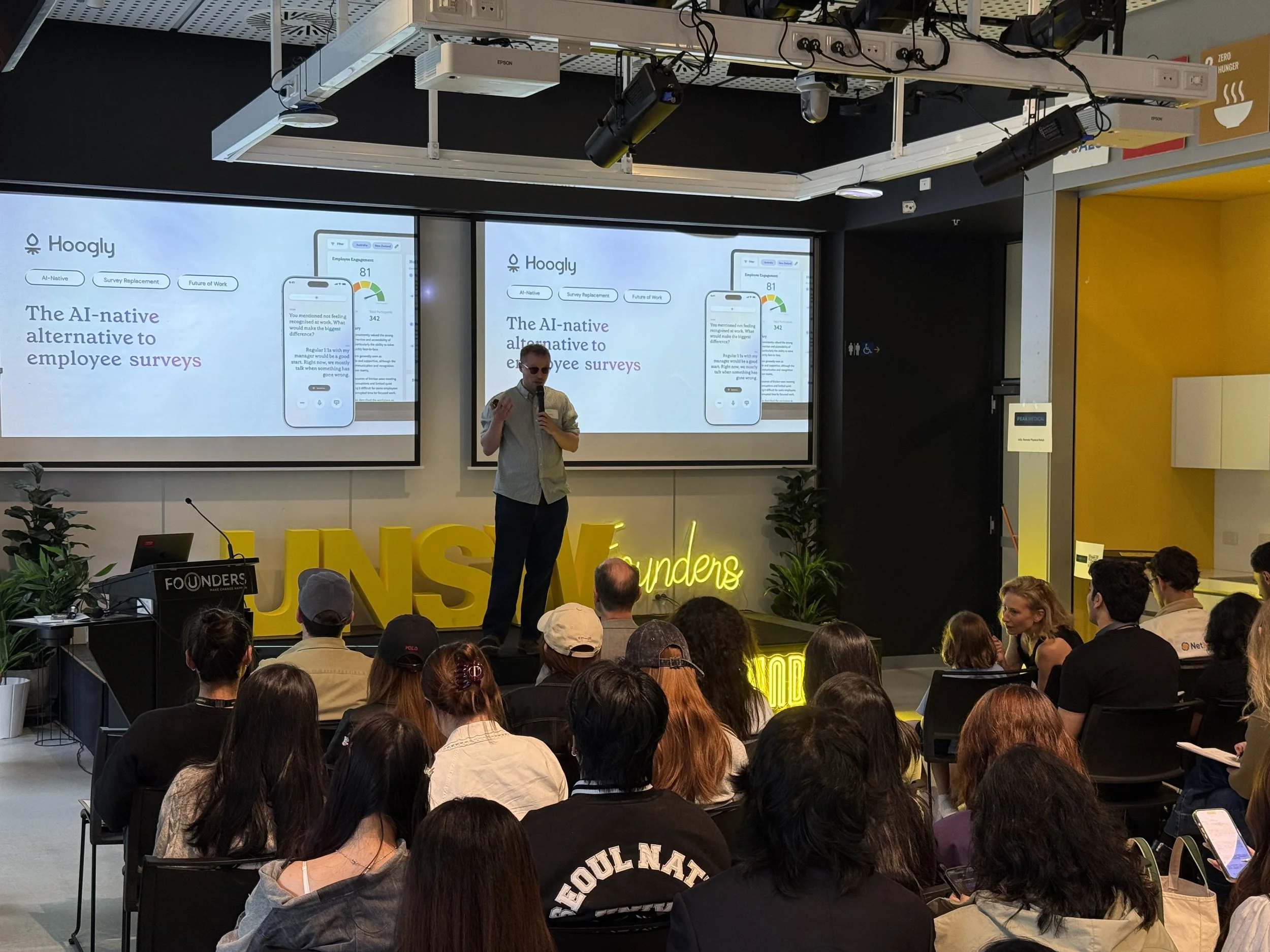
Hoogly – Employee Engagement
After 8 – Entertainment and venues
But looking back, the pitches weren’t the main event - they were the way in.
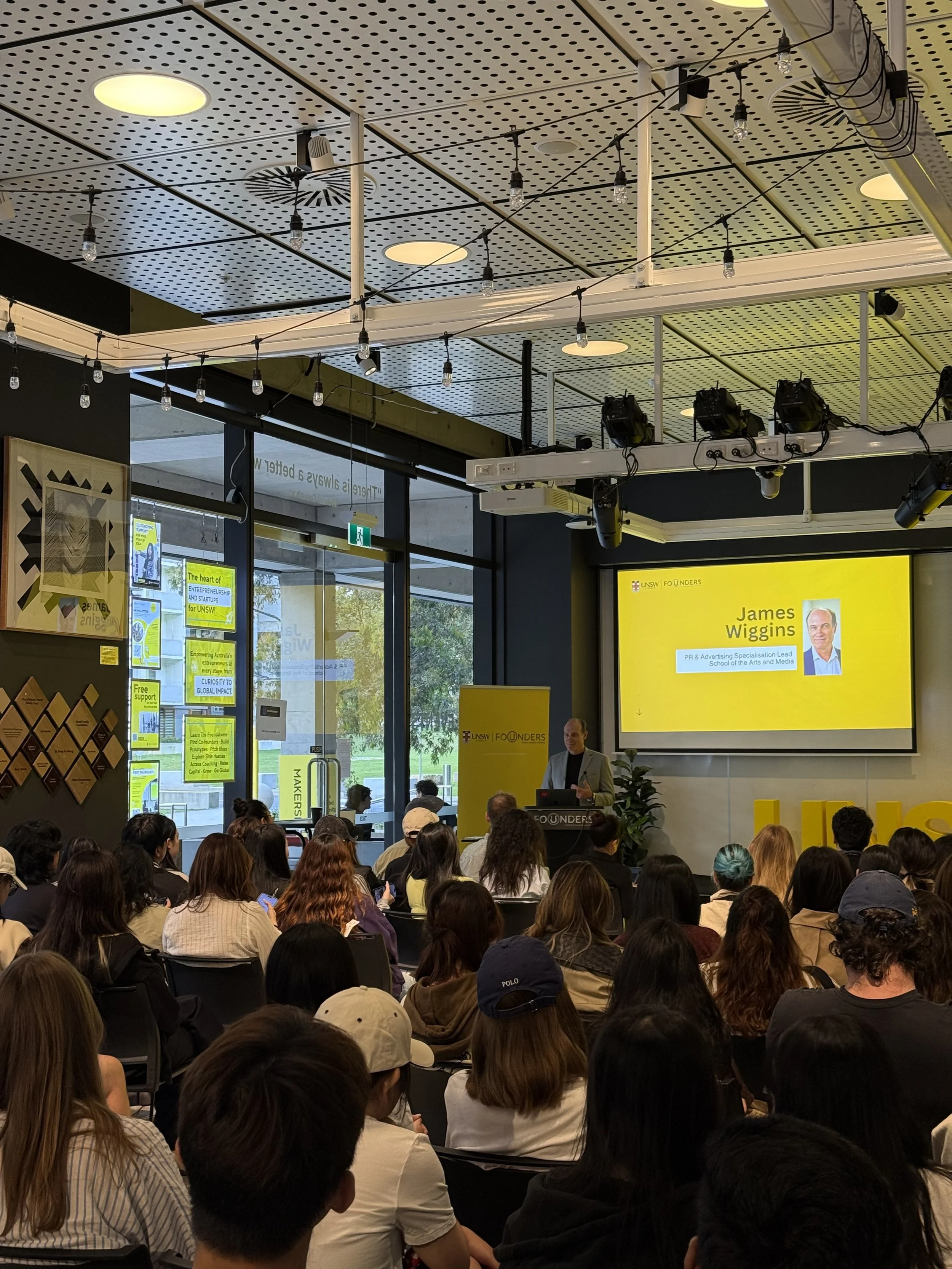
Setting the tone: James Wiggins
Before the pitches began, PR and advertising expert Professor James Wiggins opened the night with a message for students: make the most of the room.
He asked everyone to turn to the person next to them: “That person could be a future boss. A future business partner. A future client. A future valued employee.”
It’s easy to treat a night like this as a transaction, James’s point was that it rarely works that way. “Not everybody is going to leave today with a job,” he said, but “a conversation that you have tonight may actually lead to a job”, whether that’s next month, in six months or in a year.
We think that’s the part students underestimate, sometimes opportunities come from someone remembering you or introducing you to someone else. All that starts with a conversation and the best time to start building those relationships is now.
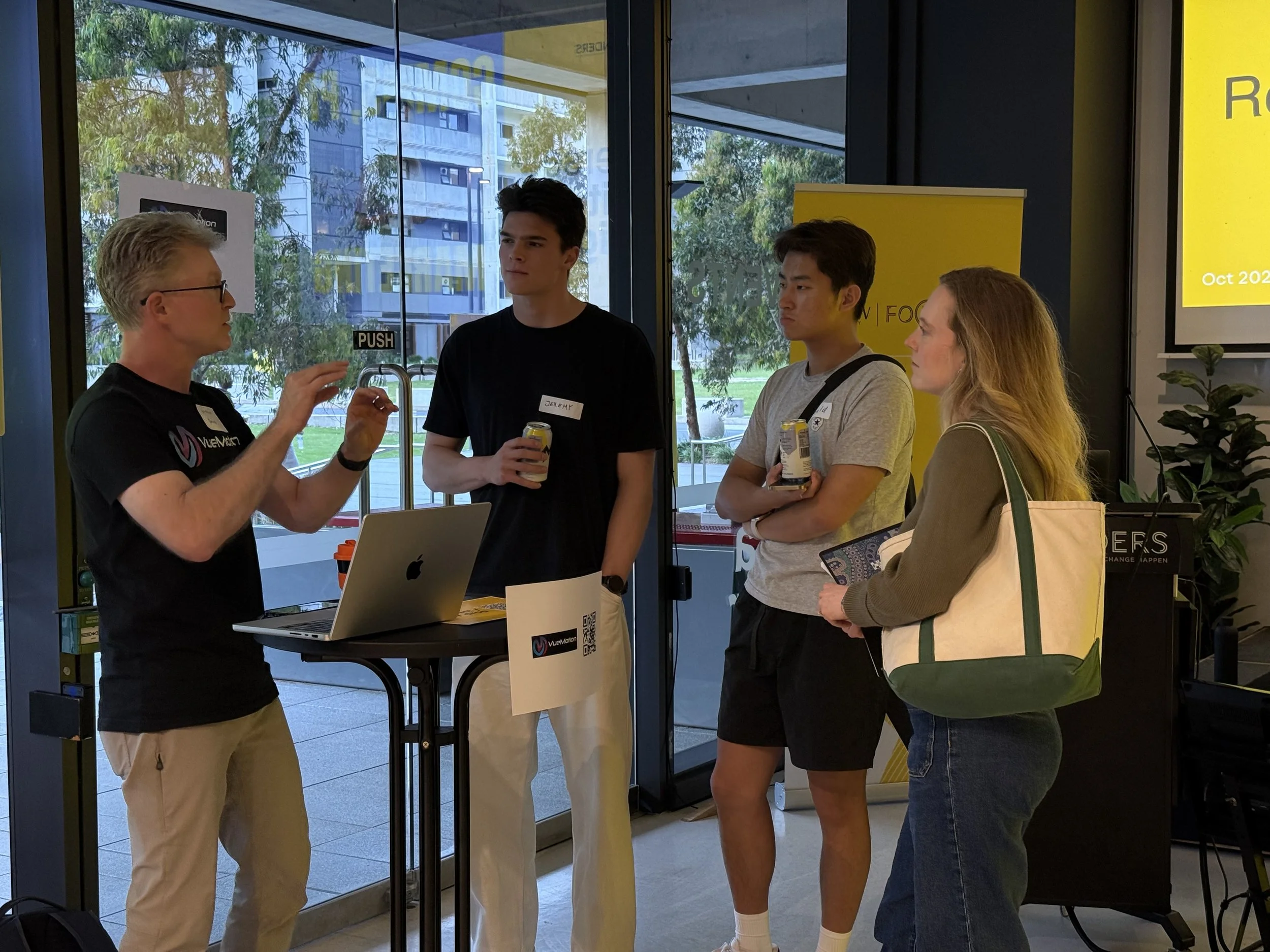
Our Key Takeaways
1. Early-stage roles mean real ownership
Almost every founder offered the chance to shape brand, content and strategy from the ground up, not just keep things the same. In a startup, you aren't maintaining a system someone else built, you're helping create it.
Working in a startup is a faster way to build skills because you're part of what's being built, rather than simply keeping things moving.
2. Storytelling is important
When you're working for an early-stage company, your role is to tell the story of the problem their customer faces and the story of the founder, not just the product.
3. Connections matter
A chat tonight might become a job next month, in six months or in a year.
Not every conversation will turn into an offer on the night, but the habit of building genuine connections early, with founders and fellow students alike, pays off across an entire career.
One founder added advice worth remembering: don't just chase what looks good on a resume or LinkedIn profile. Find projects you're genuinely passionate about, the ones that will drive you toward where you want to be.
Huge thank you to all the startups for your openness and to everyone who showed up ready to connect!
This is exactly what the UNSW Founders community is about, come and say hello at the next event, you don’t know where it could take you! Explore the lineup of workshops and events here
Check out what some of the attendees said about the night: