
Three Minutes to Make Research Matter

The competition began with a shower.
During a Queensland drought, households were encouraged to limit their water use with three-minute bathroom timers. Emeritus Professor Alan Lawson, then Dean of UQ’s Graduate School, wondered whether the same timer could challenge researchers to explain a PhD.
The first 3MT competition was held at UQ in 2008, with 160 Higher Degree Research candidates taking part. Today, it is held across more than 900 universities in over 85 countries.
The premise is simple: one researcher, one static slide, three minutes and an audience that may know nothing about the subject.
At UNSW’s 2026 final, held on 31 August, twenty PhD candidates took to the stage to explain years of research in language accessible to people beyond their discipline.
The challenge is not simply to make complex research shorter. It is to find the idea inside the complexity.
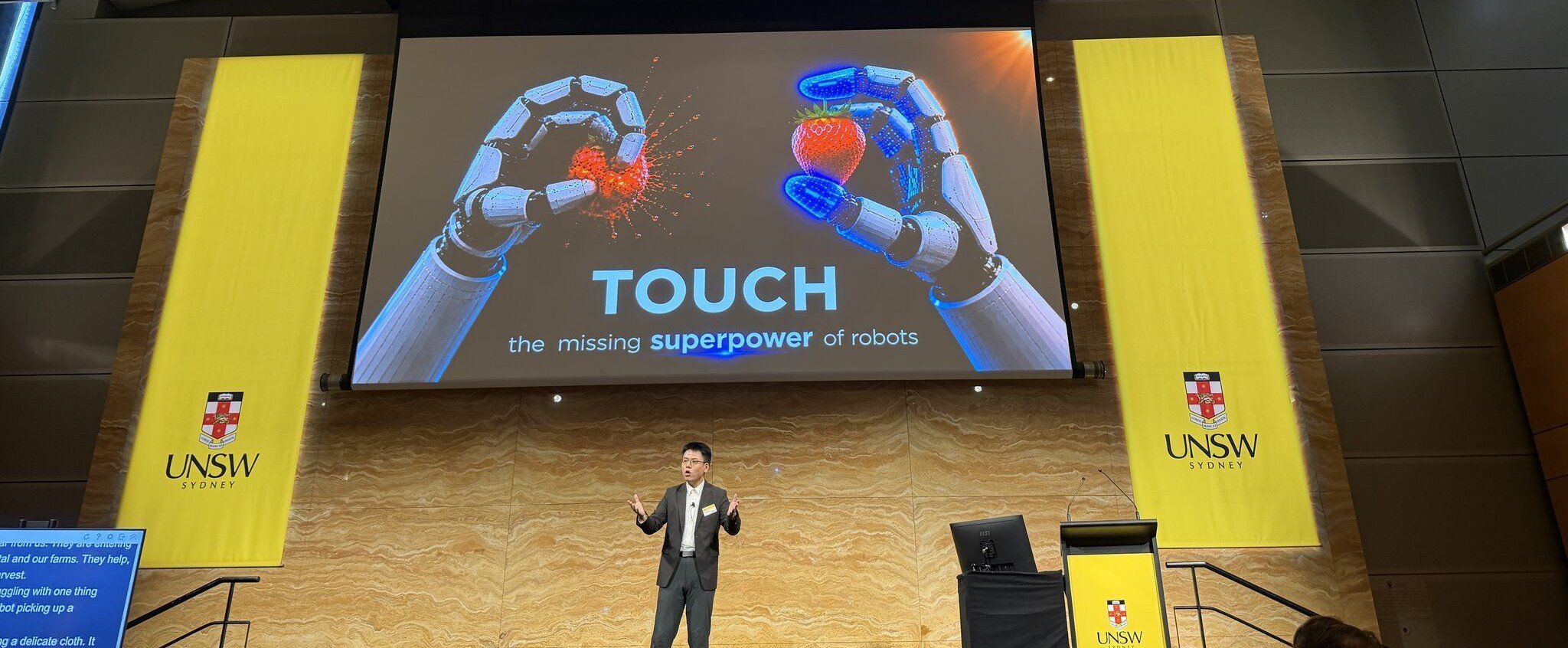
Great research deserves to be understood
A thesis can take years and tens of thousands of words; 3MT asks researchers to distil it into three minutes, one slide and a clear answer to three questions: What is the problem? Why does it matter? And what could happen next? That ability to translate specialist knowledge into shared understanding is essential for connecting with collaborators, industry, funders, policymakers and communities.
The Graduate Research School provides the primary support, guidance and structure behind the HDR journey, with people such as Louise Salmon, Sarah Jo Steinhoff, and Belinda Lee helping researchers grow along the way. UNSW Founders is proud to contribute alongside them, supporting 3MT for the past three years through drop-in practice sessions and a focused masterclass on stage presence, script refinement, lessons from past winners and composing a single, memorable slide.
Why an entrepreneurship hub supports 3MT
A great idea cannot create impact on its own. It needs people who understand it, believe in it and know how they can contribute.
That is why UNSW Founders supports 3MT. Entrepreneurship is not only about starting a company; it is about identifying important problems, developing possible solutions and bringing the right people around them. HDR candidates are already doing this through their research.
Clear communication helps that work move beyond the thesis. A discovery may need an industry partner, a medical breakthrough may need public trust, and a promising technology may need collaborators, funding or policy support.
We are not supporting 3MT to turn every researcher into a founder. We support it because every researcher should have the confidence to explain why their work matters, who it could help and what might happen next.
That is where research communication and entrepreneurship meet: in moving valuable ideas into the world.
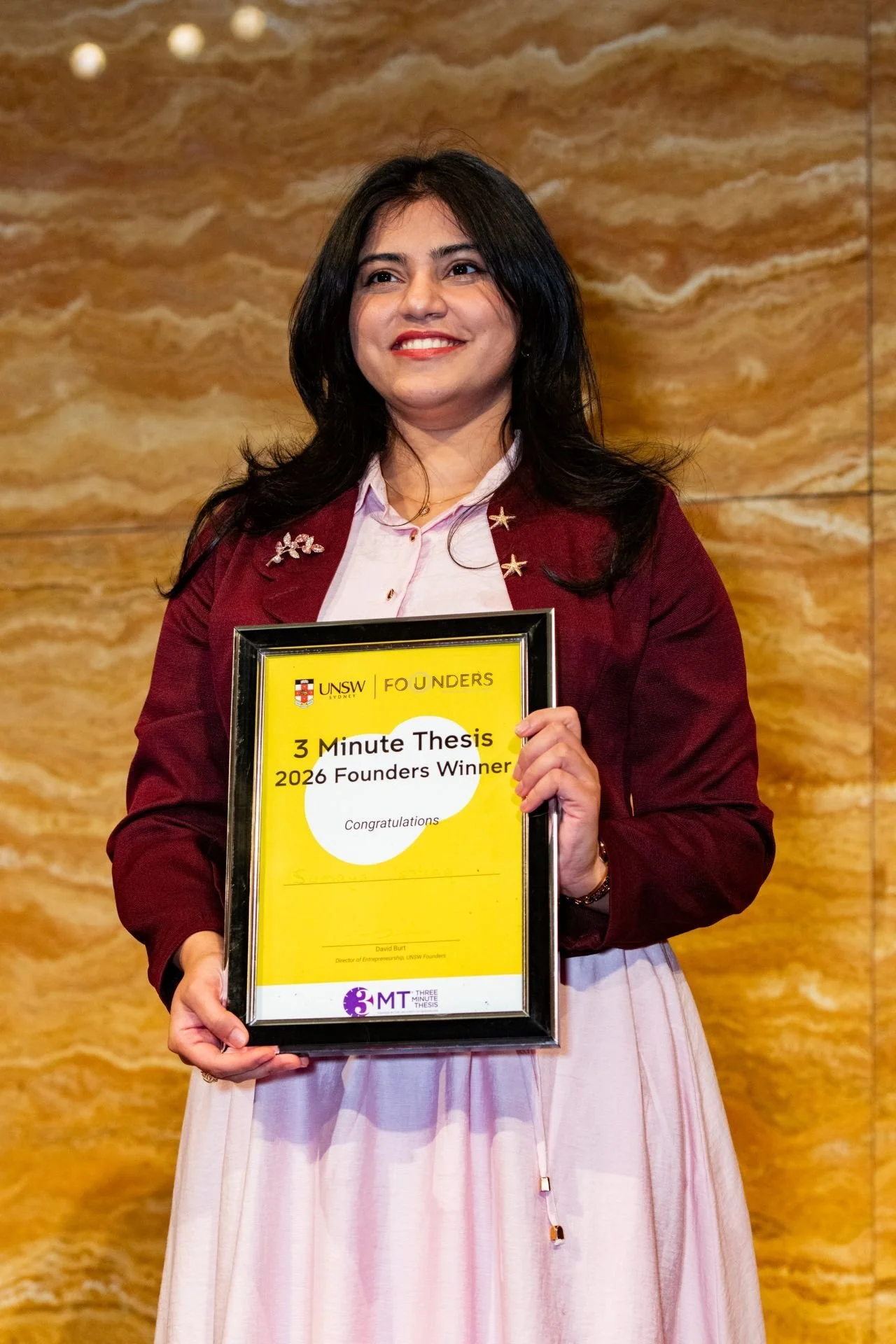
This year’s Founders Award
Each year, UNSW Founders presents an award on the finals night to recognise a presentation that demonstrates the qualities we see in strong emerging ventures: a compelling problem, clear communication and the potential to make a meaningful difference.
In 2026, the Founders Award was presented to Sumaya Ishtiaq for her research into developing a way to keep protein biosensors clean for continuous monitoring.
Many proteins are currently measured through blood tests: useful, but ultimately a snapshot in time. Continuous monitoring could be transformative. It may support the earlier detection of a heart attack by tracking troponin, identify worsening infection through C-reactive protein, or help people with autoimmune disease monitor proteins linked to inflammation.
Sumaya’s research points towards a future in which our bodies can provide a continuous stream of meaningful information, rather than isolated readings taken only when something feels wrong. It was a powerful example of research that connects a complex technical challenge to a problem people can immediately understand.
The overall 2026 UNSW 3MT winner was Benjamin Wu, whose presentation explored whether the ageing process of human eggs could be reversed to improve fertility outcomes. His research asks whether young nursing cells could help restore the function of ageing eggs, with potential implications for IVF. Read more at UNSW Newsroom
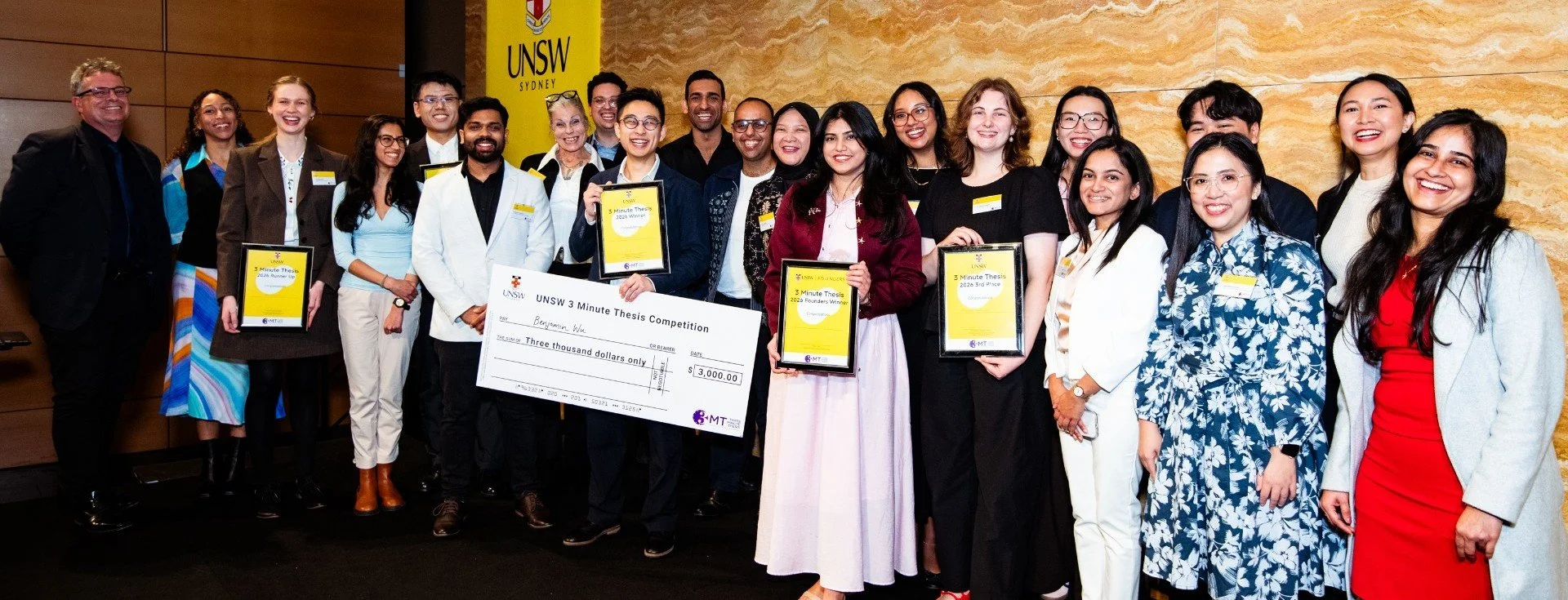
Three minutes, many possibilities
For three minutes, research leaves the laboratory, dataset, and literature review. It enters a shared space where a general audience can listen, understand, and care.
That is the value of 3MT. It gives HDRs an opportunity to build confidence and communicate beyond their field, while giving the rest of us a glimpse into the remarkable work happening at UNSW.
The Graduate Research School and the people who support HDRs make that opportunity possible. UNSW Founders is grateful to play a complementary role.
Because whether a researcher is speaking to a community, collaborator, policymaker, investor or future founder, the challenge remains the same:
You have three minutes.
Make them count.