
Michele Stansfield on What It Takes to Keep Going as a Founder
A Practical Guide on Founder Survival, Self-Awareness and the Courage to Build with Purpose

21, July 2026
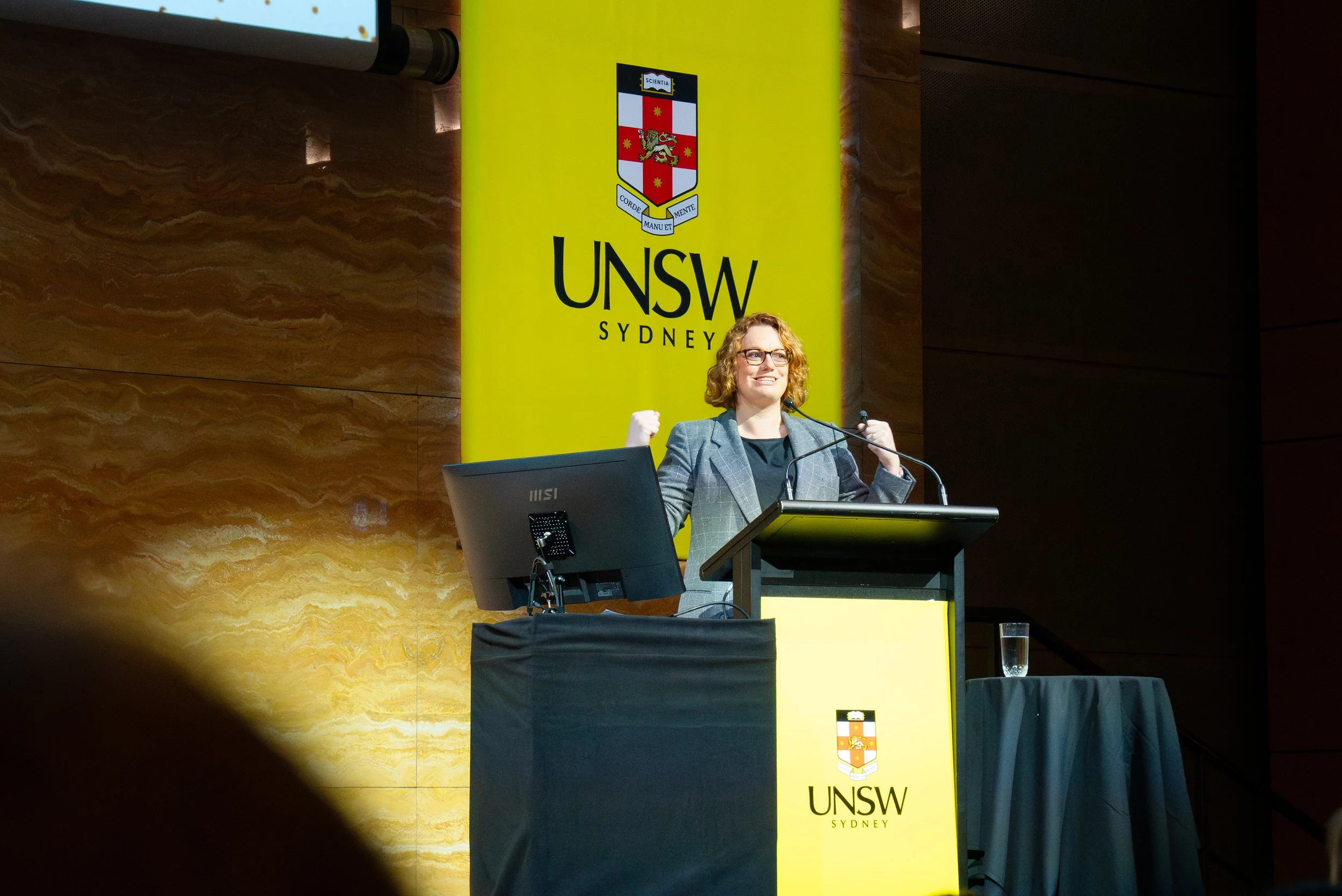
The Female Founders Showcase was created to celebrate women building incredible things across Australia.
Hosted by UNSW Founders, the evening brought together founders, supporters and people who want to see more women starting, building and leading.
As keynote speaker, Michele Stansfield, Co-Founder of Cauldron Ferm, offered something many founders in the room could recognise: not a polished version of startup life, but an honest reflection on what it takes to keep going.
“I never planned to be a startup founder” she said.
Before Cauldron, Michele spent two decades in science and industry, including a PhD and a long career in pharmaceuticals and fermentation. She grew up in regional Australia, where, as she put it, “we do hard things in hard places.”
When Michele joined the UNSW Founders 10x Accelerator four years ago, she didn’t arrive with the typical startup founder backstory.
“I was curious and entrepreneurial, but I was also 41 years old. I was from the country, and I had a 20-year pharmaceutical career under my belt.”
That was part of her point: founders do not need to fit one narrow mould.
From there, Michele shared three practical lessons on what it takes to build something meaningful, and keep yourself intact while doing it.
1. Choose a problem worth the sacrifice
Michele’s first lesson was direct: choose a problem that is genuinely worth the cost of building.
“Things are going to get gnarly. Things are going to be ugly and beautiful, but the problem you are solving needs to be worth at least the same or more than the sacrifices we’re making every single day.”
For founders, especially women founders, those sacrifices are rarely abstract. Michele spoke openly about the invisible load many women carry while building companies: family responsibilities, supporting partners, raising children, and managing expectations that are rarely placed on male founders in the same way.
When the journey becomes difficult, the mission has to be strong enough to keep pulling you forward. That is why the problem matters.
But Michele was also clear that the founder journey is not only defined by sacrifice. There will be beautiful moments too: breakthroughs, shared wins with your team, and the satisfaction of seeing an idea become possible.
The challenge is making sure you have enough of yourself left to experience them.
“You need to be able to maintain your humanity and your relationships, so you have the ability to enjoy those moments.”
Building something genuinely new will ask more from you than you expect. Choosing a problem that matters is what makes the hard parts easier to carry, and the beautiful parts easier to recognise.
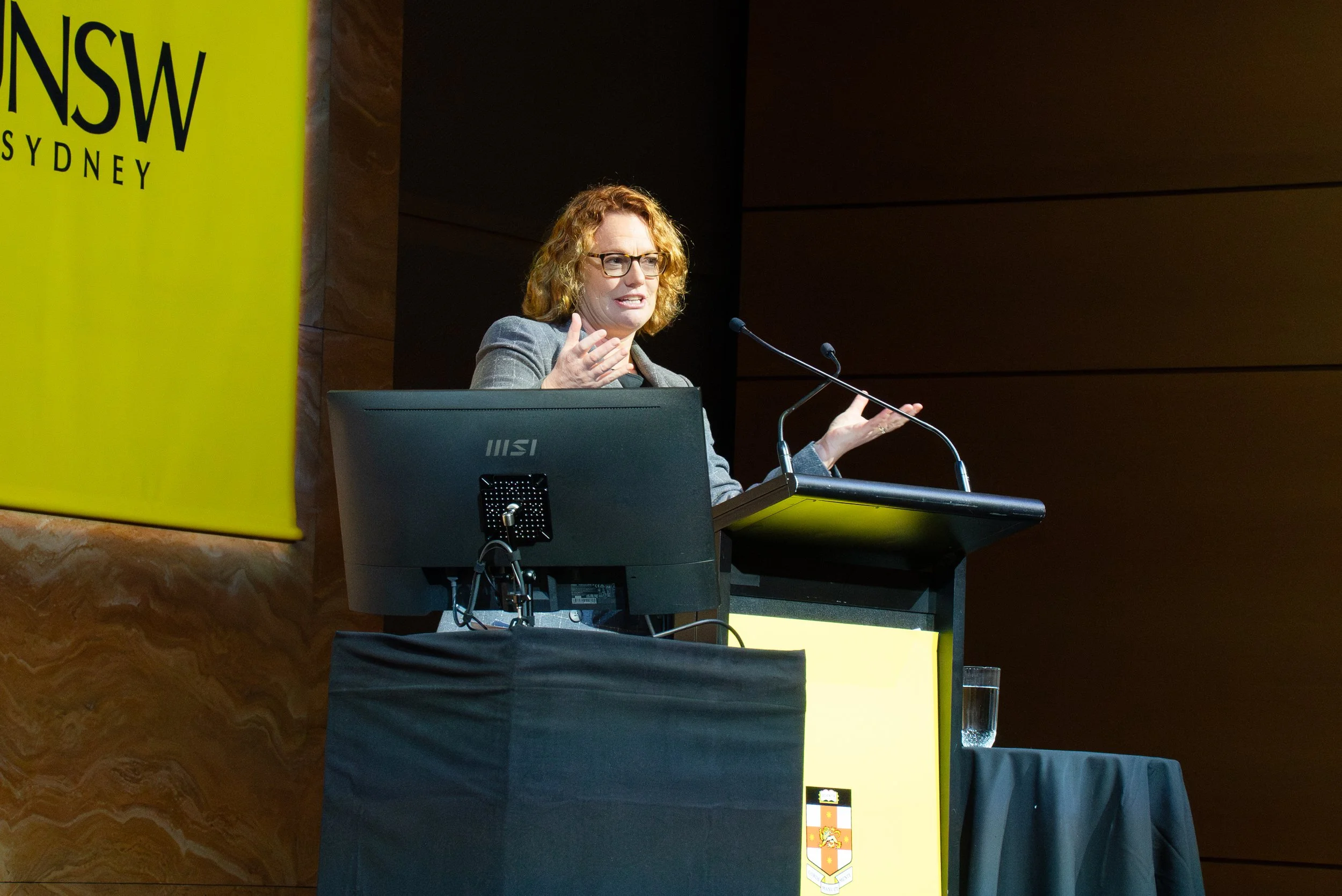
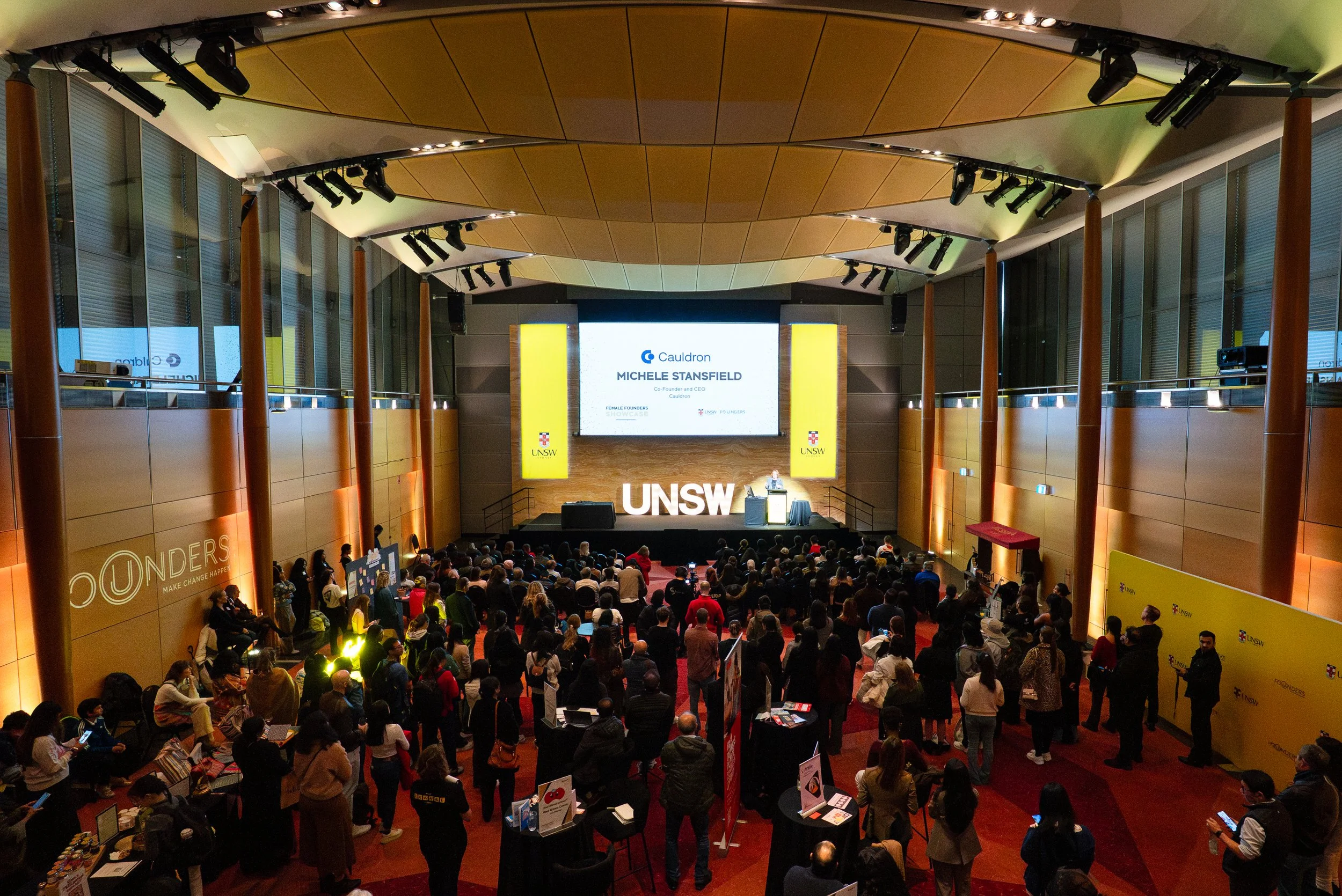
Standing room only for Michele Stansfield’s keynote.
2. Your job is not to do everything. Your job is to lead.
Founders can easily confuse constant activity with value. Michele had done it herself.
“A lot of founders believe the more I do, the more valuable I am to the company,” she said. “It’s actually just the opposite.”
Twelve months earlier, Michele had been moving at full startup speed: taking around 200 flights a year, appearing on every stage she could, and speaking to every VC she encountered.
She reminded the room that founders energy is not infinite. For a company to keep growing, the founder has to remain capable of leading it.
“The most valuable thing you can do is preserve your ability to lead the company.”
Michele compared founding a company to creating a ballet. One minute, you are on the balcony choreographing the dance. The next, you are on the floor with the team. To move between those roles, founders need clarity, energy and space. If you are exhausted, you cannot lead well. You can only react.
Her message was clear; that founders have more agency than they sometimes allow themselves to believe.
“As the architect, you choose the course of action for your company” Michele said.
That means founders are not only building a product. They are also designing the company around it. They can set expectations, build the team they need, and decide what kind of capital makes sense for the business they are trying to create.
Her advice was not to do less but to become more deliberate about where your energy goes, what only you can do, and what the company actually needs from you.
“My company didn’t need me to do everything. My company needed me to be at my best.”
3. Nobody builds anything meaningful alone
Michele’s third lesson was about team-building, but not in the usual “hire great people” sense.
“Nobody builds anything meaningful alone,” she said. “The strongest founders are not the people that carry everything. They’re the people that build extraordinary teams.”
For Michele, building an extraordinary team starts with self-awareness. Founders need to understand what gives them energy, what drains them, and where their time is most valuable.
“As a founder, surround yourself with people who gain energy from the things that drain you,” she said. “Building a team of someone exactly the same as you is going to get you nowhere.”
But Michele was also honest that building the right team is only part of the work. Early on, she had surrounded herself with capable people, but she was still trying to carry too much herself.
Self-awareness changed how she worked with them. “I stood back. I set the vision. I let them go.” That shift allowed her to lead with more strength and clarity, while slowly regaining the energy she had lost.
“The greatest gift I ever gave my team, my investors and my family was this environment of self-awareness and advocacy to deliver.”
The lesson is about founders knowing themselves well enough to build teams that make the company stronger. For Michele, that meant surrounding herself with people whose strengths balanced her own.
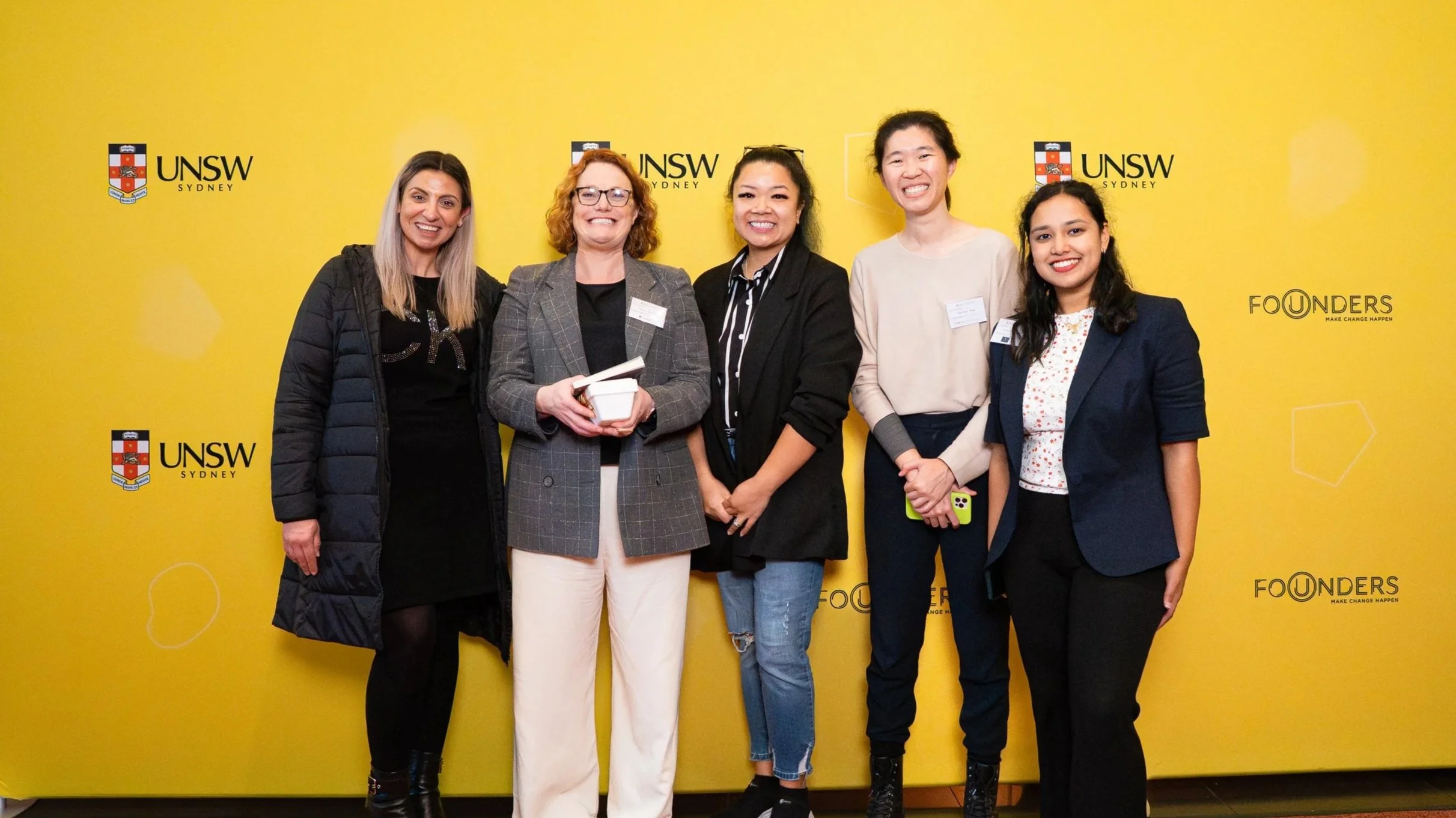
Michele (second from left) with attendees from the Female Founders Showcase
The real founder work
Michele’s keynote was about making startup life more honest.
Her message to founders was practical and generous: learn from people who have been through it, talk to the experts, understand your values, build the right support around you, and invest in yourself.
Investing in yourself might mean gaining greater self awareness, refining your priorities, or fully trusting the team around you. The right choice will look different for every founder.
The purpose is the same: protecting your ability to continue to lead. Or, as Michele put it, “Your job is to be able to keep going.”
Because building a company is not just about raising capital, public recognition, or being seen on stage. It is about staying clear enough, strong enough and supported enough to keep making the decisions only you can make to deliver on the mission.
At a night dedicated to celebrating women founders, Michele offered something beyond inspiration. She offered permission to build authentically.
And for every founder wondering whether they fit the mould, Michele’s answer was clear: you do not need permission to build something that matters.