
How the MCIC Makerspace is Accelerating Research Translation
The UNSW Founders Makerspace is designed to help test, refine and turn ideas into real world impact.
18 August, 2026

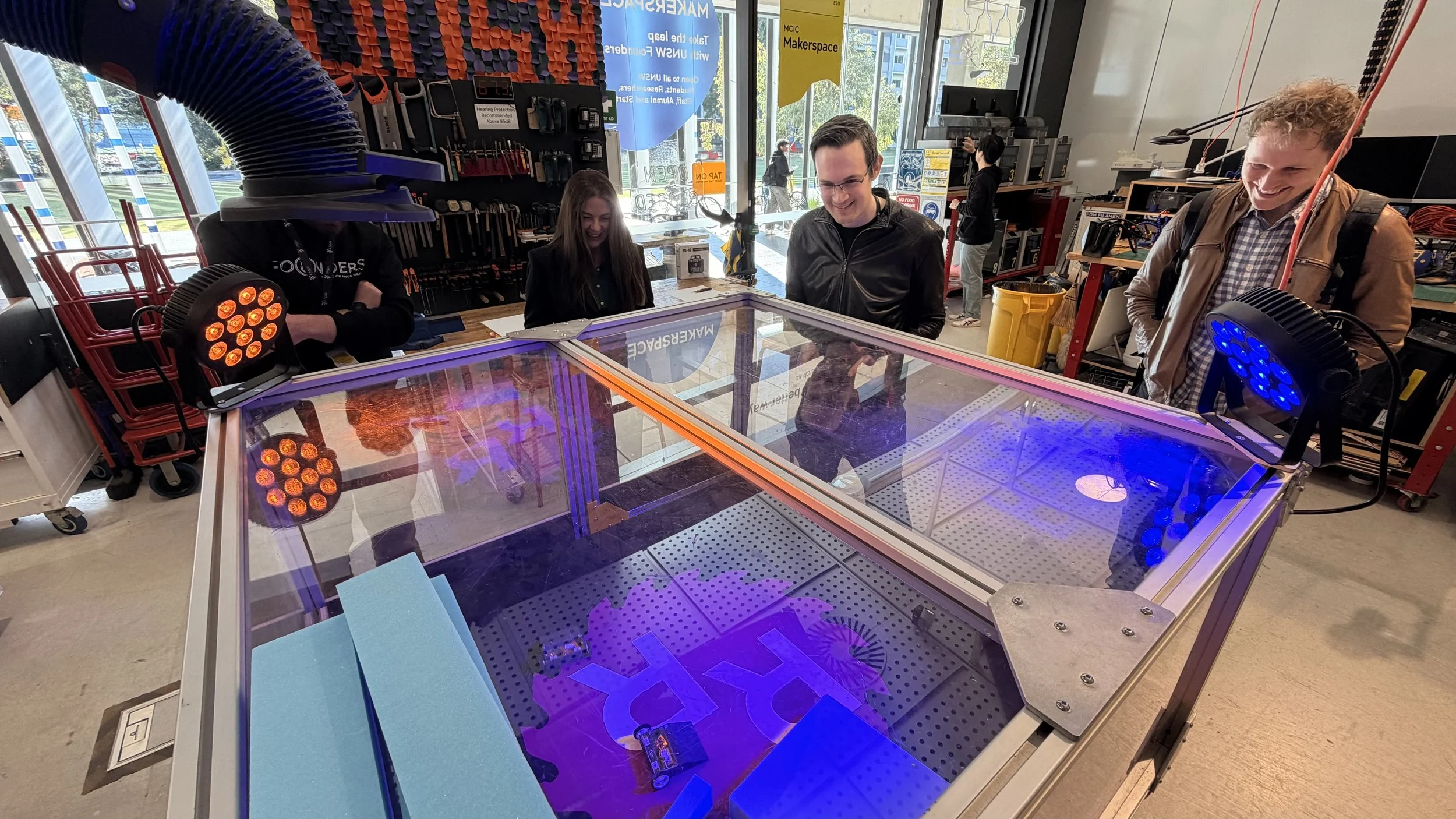
Research translation is often described as the journey from discovery to impact.
In practice, some of the most important progress happens in the less visible stages: when a concept is tested, a design is reworked, and a promising idea begins to prove that it can function beyond the research environment.
At the UNSW Founders Makerspace researchers can work through these stages without committing to costly tooling or large-scale manufacturing too early. Located in the Michael Crouch Innovation centre the Makerspace combines advanced prototyping and manufacturing equipment with specalist staff who provide free technical expertise to help UNSW startups and researchers test and iterate.
The value of the MCIC Makerspace extends beyond the simple access to machines. Researchers work alongside the team to refine their designs and build practical skills to continue prototyping independently. Shortening the critical feedback loop between a research insight and its potential commercial application, and in the process reducing the cost of moving towards manufacturing.
Here are just some of the innovations that have come to life thanks to the prototyping support of UNSW Founders.
A $5 alternative to a $30,000 eye test
Jack Gordon is an optometrist and UNSW researcher who is working to develop a more accessible way to diagnose keratoconus, a condition that can significantly affect vision by changing the shape of the cornea.
Current diagnostic options sit at two extremes. A basic retinoscope is affordable but provides limited, subjective information. At the other end is a corneal topography machine, which can cost between $20,000 and $30,000 and creates a detailed map of the eye’s curvature.
Jack is developing a device that aims to reproduce the full functionality of the $30,000 device for approximately $5.
The prototype that he has built in the MCIC Makerspace uses reflected light and other components to capture information about the cornea, and a custom algorithm then uses those images to calculate its curvature.
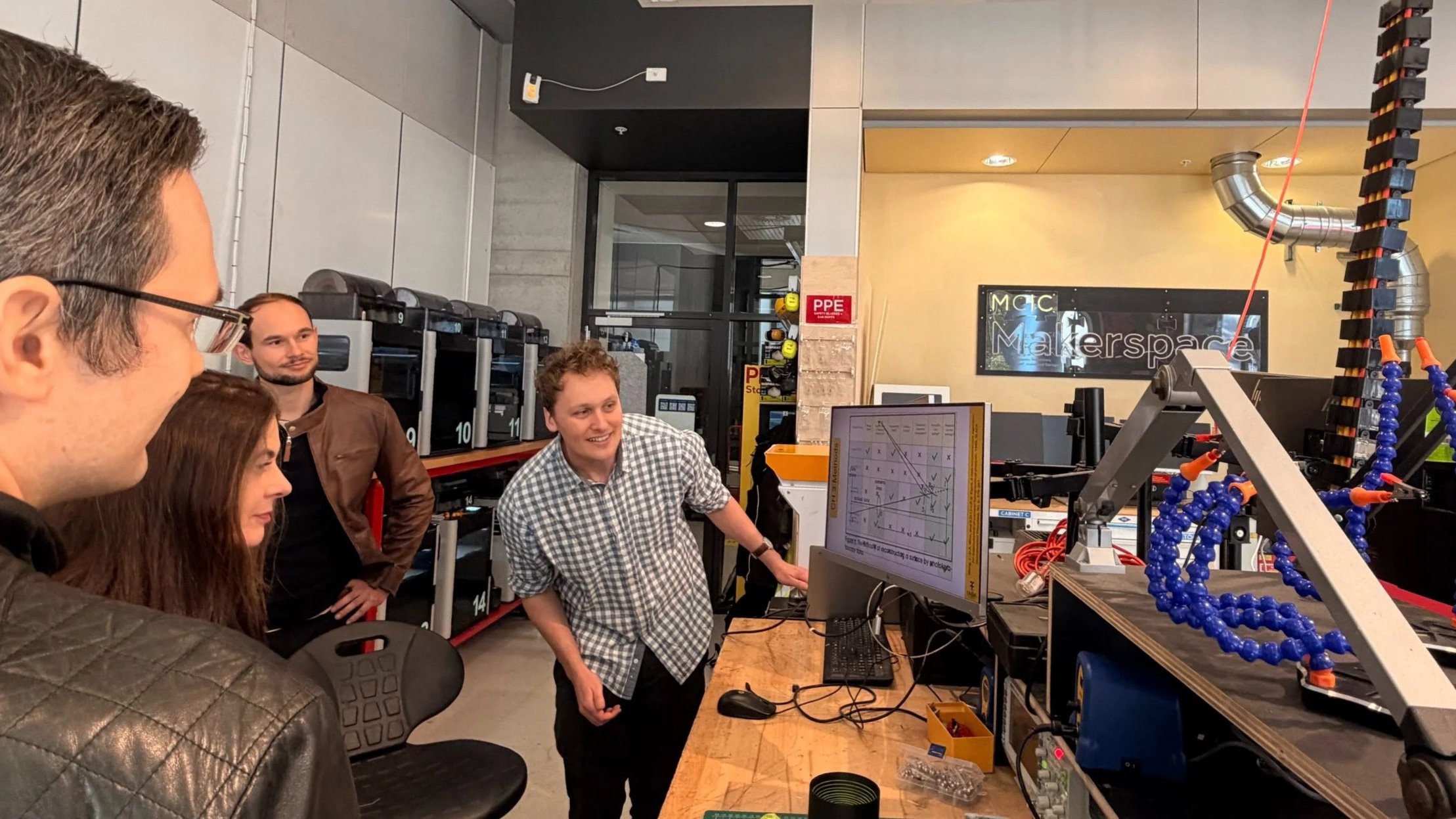
The concept may be simple but bringing it to life requires components produced with a high degree of precision. Jack had already explored other multiple other labs to help make his design but wasn’t able to get the help he needed. What made the MCIC Makerspace the right fit was the level of one-to-one support available. Jack was able to work with the Founders full-time industrial designer to refine the design, learn the equipment and then continue to use the space and tools to iterate independently.
Using the Makerspace’s resin stereolithography, or SLA, printers, he has been able to produce components at approximately 25-micron level precision and work through more than a dozen prototypes – each time improving and increasing the success of his design.
Thanks to working with the UNSW Founders team, Jack is moving closer to a manufacturable version that could support earlier diagnosis and care for communities that would not otherwise be able to access this diagnosis or where the equipment may remain out of reach.
Making eye care portable and worth wearing
Sarah Crowie is approaching access to eye care from a different direction.
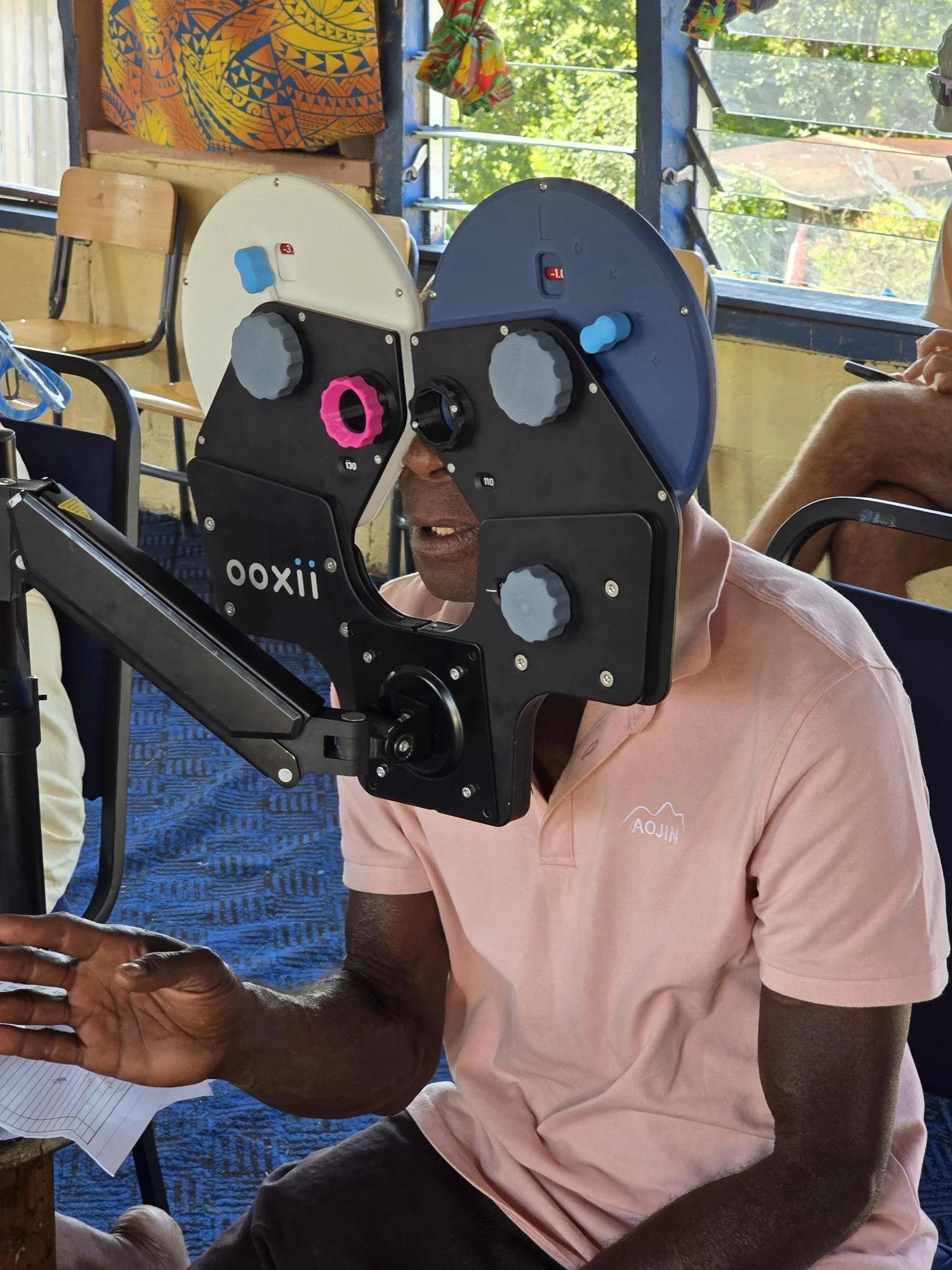
Through Ooxi, Sarah has created a social enterprise that delivers a compact eye-testing system that can fit inside a backpack and be carried into remote communities.
Alongside the testing unit, she is designing lightweight, modular glasses that can be fitted and distributed locally.
The challenge is not only getting glasses to people. It is creating something they will actually wear.
Donated eyewear can be poorly fitting, impractical or aesthetically unappealing. Sarah’s work recognises that design and dignity are connected: people should not have to choose between seeing clearly and feeling comfortable in what they wear.
Her early testing units, frames and product prototypes have been created using the MCIC’s selective laser sintering, or SLS, 3D printers.
After printing, the glasses frames pass through specialist post-processing equipment that removes excess powder, recycles unused material, and polishes the surface. What could take hours to finish manually can be completed in batches, with approximately 200 glasses frames processed in half an hour.
These glasses that have been designed and made in the Founders makerspace has derisked her product, help her confirm the design and be able to take the next step in large scale manufacturing with confidence.

Testing solar-panel recycling before going industrial
Solar panels are set to be one of the world’s fastest-growing sources of waste.
We need this green energy solution, but right now we don’t have a good solution to recycle that technology. This is where the team behind Hello Again Solar step in.
Inspired by the world leading solar research at UNSW, the founder of Hello Again Solar, UNSW alumni Rong Deng explored how to reclaim valuable elements like silver, silicon, copper from end-of-life solar panels.
Together with her team, Rong has developed a process that uses lasers to delaminate the panel that can cleanly and effectively separate and recover these pure components.
The Hello Again Solar team is based within UNSW Founders, only a short distance from the Makerspace. That proximity means they can move between their office space and machines throughout the day, running repeated experiments alongside the technical team.
These may be small-scale experiments, but they are answering questions with significant consequences for scale. The results directly inform how the team designs its larger industrial equipment, including its work in facilities overseas.
Building “lane assist” for scuba divers
Nautic Technologies used the Founders Makerspace to develop their unique system that actively make scuba diving safer.
Founded by active scuba diver Josh Lee, Nautic Technologies is creating an automated buoyancy-control system that can be retrofitted onto a standard buoyancy control device.
Existing dive computers can monitor depth, time and physiological risk; warning divers as they approach unsafe limits. Nautics Technologies system is designed to go further by actively intervening.
Maximilian Keller, a UNSW robotics graduate working with the company, describes it as “lane assist”.
The diver remains in control, but the system can prevents them from exceeding a determined depth, maintain neutral buoyancy, hold them at a decompression stop or support an emergency ascent at a safe controlled rate.
Building that functionality requires highly specialised hardware.
Nautic technologies were first introduced to the Founders Makerspace during their time within the UNSW Founders Accelerator program in 2025 and started using the space to prototype and test their first concept.
The team has developed custom inflators, dump valves, pressure-resistant enclosures and seals that are not available off the shelf. The Makerspace specialty machines have allowed them to create durable inflator components, while rapidly producing and refining moulds for valves and electronics.
For Max, his work with Nautic tech. brings the Makerspace journey full circle. Before joining Nautic Technologies, he was employed as a casual within the Founders Makerspace working with startups and teaching them how to engage with the machines. He is now applying his knowledge to a physical product designed to save lives.
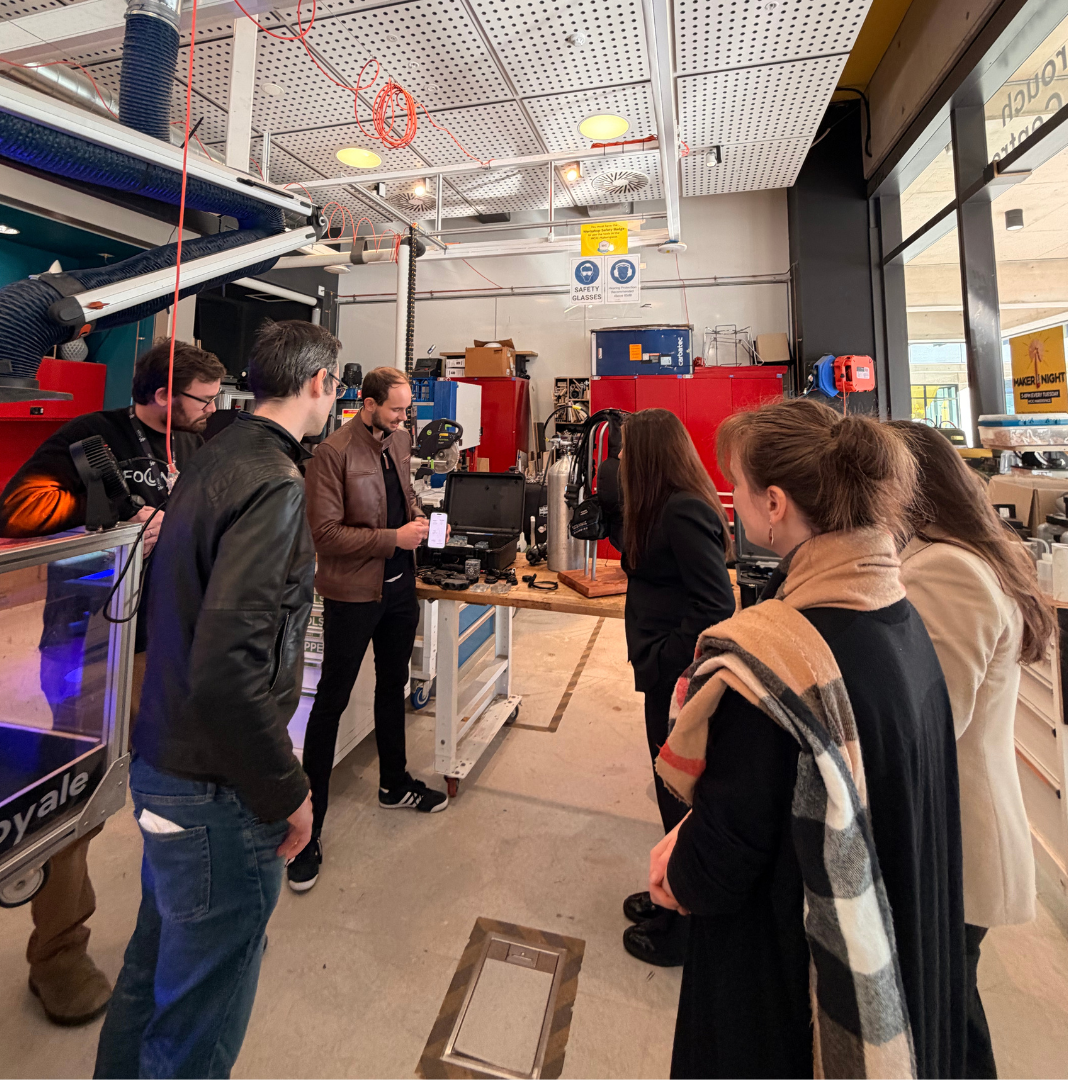
The infrastructure to keep going
The technologies these researchers are building could not be more different, but each team faces the same translation challenge: turning specialist knowledge into something that works beyond the research environment.
That requires advanced equipment, but equipment alone is not enough.
The key is supporting access to machines with specalised industry knowledge, technical skills and insights into the steps to large scale manufacturing. That’s what the UNSW Founders dedicated makerspace provides. It allows for flexible access when an experiment needs ten more iterations and a community that celebrates the process of iteration as you move from first prototype to the next version.
At the MCIC Makerspace, researchers and startups are building practical capability to keep developing technologies for a greater world.
If you want to bring an idea to life or want to find out how you can engage with Founders please visit our Makerspace site