
When AI Meets Film: Inside the OMNI AI Film Festival at UNSW Founders
What happens when anyone with a laptop and an idea can make a movie?

11 May, 2026
OMNI the world's leading AI film festival, has been exploring that question since it launched in Sydney 18 months ago. Presented globally across sell-out events and representing creators from over 100 countries, it brought its latest program to the Michael Crouch Innovation Centre (MCIC). Screening short films, made entirely with AI, followed by a panel discussion with some of the people thinking hardest about where this is all heading.
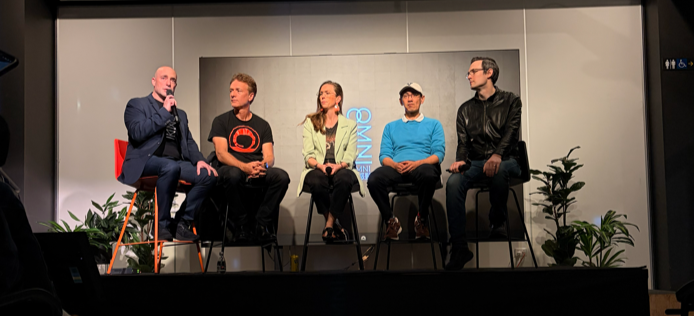
Over 50 minutes, the audience watched five short films created entirely with AI. No actors. No cameras. No traditional production crews. Just prompts, software, imagination, and tools that are still finding their limits. The screening was followed by a panel discussion with leading industry voices exploring the creative, technical and ethical questions raised by this new wave of AI-generated cinema.
The films were a selection from OMNI's Shanghai program, themed around emotion. Movies from solo creators and small teams, made on budgets ranging from a few hundred dollars to tens of thousands, with production timelines as short as 4 weeks.
Korean short stories translated into moving image abstract sequences of animals in impossible compositions; old film grain layered over crisp modern resolution. Things that, as panellist and film professor Dr Greg Dolgopolov put it, “simply couldn't have been made any other way”.
"I wouldn't have known these were AI films if I hadn't been told," he said. "From the first film I was fully engaged, I wasn't looking for [the classic AI tell of] six fingers [on a human's hand]."
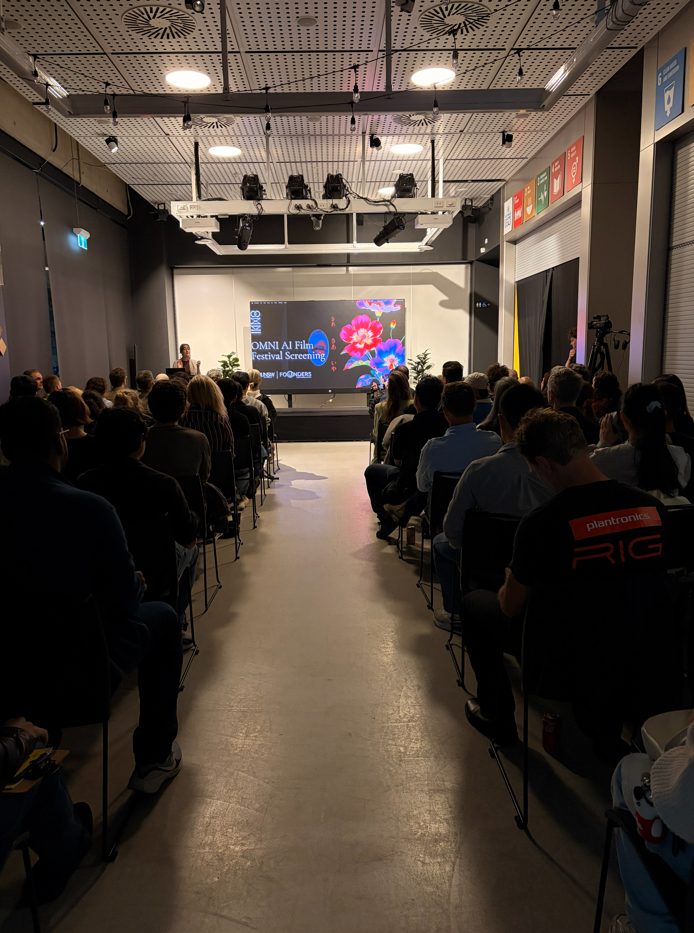
That was perhaps the most striking thing about the evening. A year ago, the conversation around AI film was almost entirely about its limitations, the smeared faces, the Will Smith spaghetti moment that became a cultural shorthand for everything wrong with generative AI video. What screened at the MCIC felt categorically different, not perfect, but it was genuinely moving and “felt” like cinema.
And that shift became the centre of the conversation that followed. After the screening, the audience stayed for a panel discussion exploring what AI filmmaking actually means for the future of creativity, storytelling, and the film industry itself.
Moderated by Aryeh Sternberg, co-founder of OMNI International AI Film Festival, the panel brought together four individuals who between them represent the full spectrum of where AI cinema is being made and debated right now.
Marie-Céline Merret Wirström, co-founder of MC&V and the AARON Awards, called out what she'd been watching for: the moment when a filmmaker is "almost in symbiosis with the tools." That's when the emotion comes through, she said. And she saw it on screen that night.
Yan Chen, CEO of AurorAI and a VFX veteran who has worked on productions at the scale of hundreds of millions of dollars, framed what he was seeing as democratisation in the most literal sense.
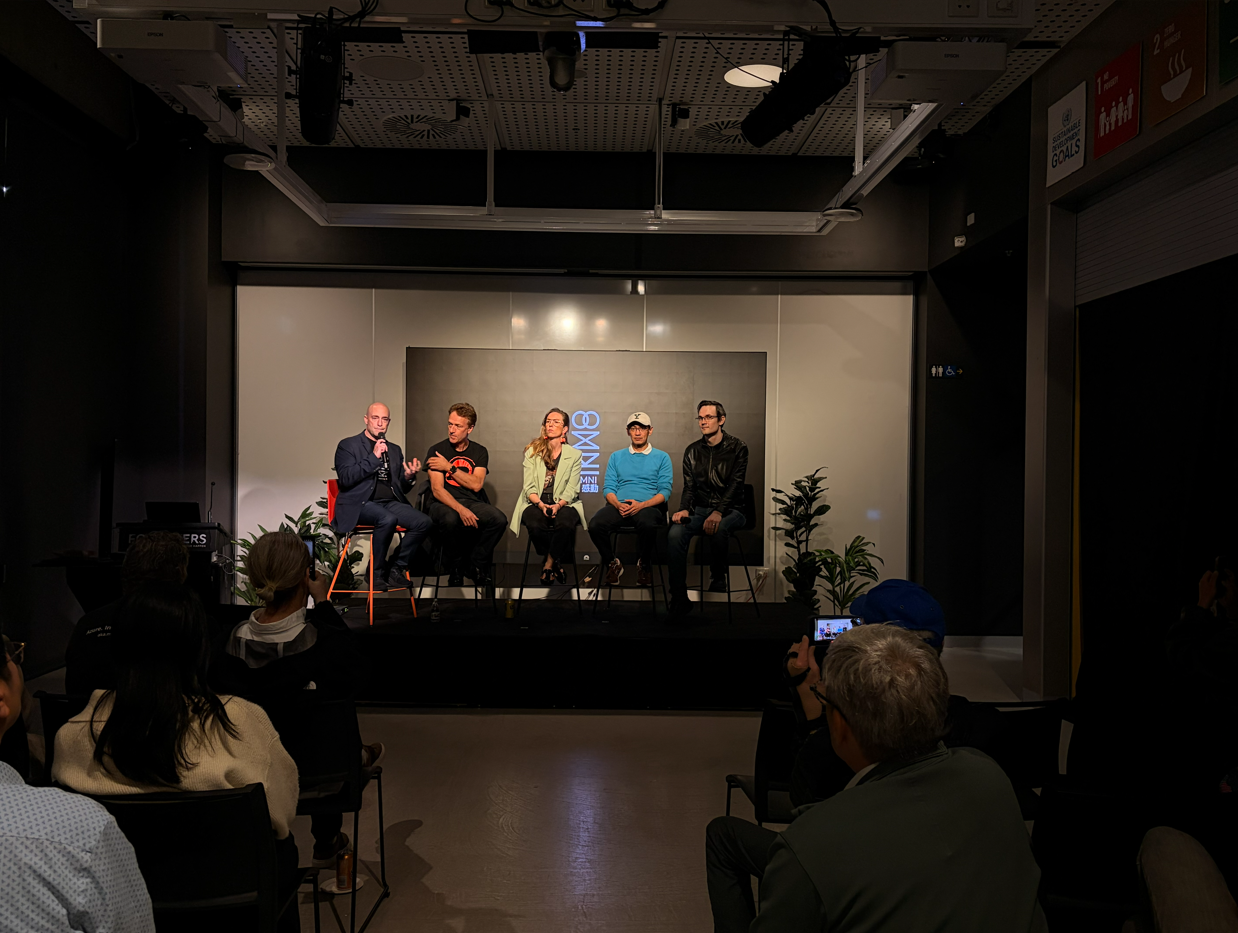
"Anybody in this room can go home, pick up your computer, log on to a website and do that." When the barriers to entry collapse, this is what rises to the top. “There's going to be a lot of [slop]”, Yan Chen said, “but the best of the best will be better than anything we've seen before.”
David Burt, Director of Entrepreneurship at UNSW Founders, brought the commercial lens. He pointed to the credit screens, one name where there used to be hundreds, as the most telling signal of what's shifting. His analogy of Lake Technologies, the Australian company that out-innovated Dolby and got acquired by them, landed well: small, fast, technically excellent teams can build what large organisations simply cannot move quickly enough to attempt.
And Dr Gregory Dolgopolov, who teaches film at UNSW and directs the Vision Splendid Outback Film Festival, offered the grounded take: "Filmmakers are already using aspects of AI in live action films, whether they admit it or not."
The Question Everyone Was Really Asking
The room got most alive when the conversation turned to jobs. Are these tools taking work away from filmmakers, editors, sound designers, VFX artists? The honest answer from the panel: yes, and no, and it depends on where you sit.
What's clear is that the creative and strategic sides of production – long kept in separate silos – are collapsing into one. The value is shifting from execution to judgment. When anyone can generate the content, what matters is who decides what gets made, what gets cut, and what's worth watching. That's still deeply human work.
Marie-Céline put it plainly: AI now means that “it takes 20% of the effort to get to 80% of the output. But that final 20%, the craft, the nuance, the thing that makes a film feel like it was made by a specific person with a specific perspective, still takes the other 80% of the time. And that's not going anywhere”
The audience had their say too. One woman from a psychotherapy background described watching the films as “witnessing a new artistic voice”, capable of rendering dreams and nightmares in ways that conventional camera and script couldn't reach.
Someone else pushed back. “The democratisation of content creation is real”, she said. But so is the AI slop already flooding social media. The attention economics that reward exploitation over craft, and the creatives who won't be able to adapt when entire pipeline stages disappear. Those things are also real.